Before open-concept kitchens and smart appliances took over, American homes were filled with objects that were unapologetically bold, colorful, and built to last. The 50s and 60s had a design language all their own — and some of it is worth serious money today.
The Classic Rotary Dial Telephone
You’ve probably seen one hanging on a diner wall or in a grandparent’s hallway — that heavy black handset, the satisfying click-click-click of the dial spinning back. Rotary phones were standard issue in American homes from the late 40s through the 70s, and they were built like tanks. Western Electric made millions of them. A basic black model in working condition fetches $30–$60 today. Colored models — especially pink or turquoise — can hit $150 or more.
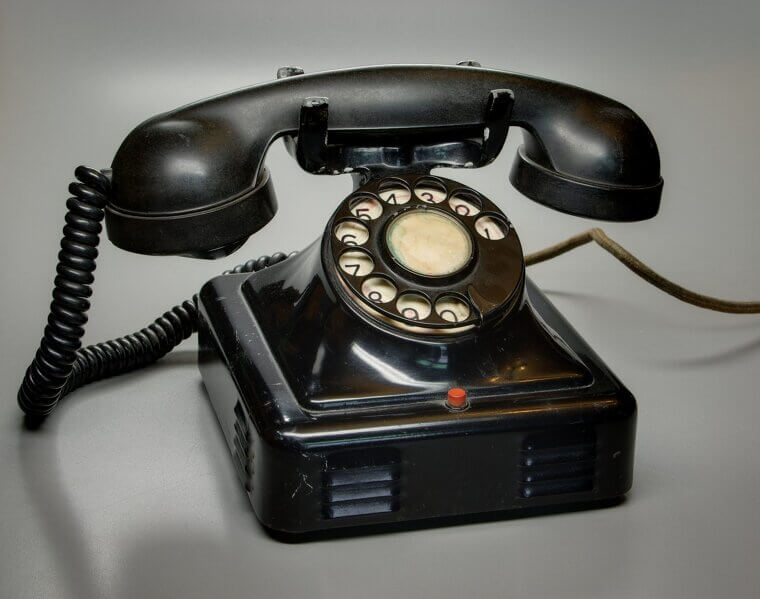
Collectors specifically hunt for two-tone models and wall-mounted versions. A working pink Western Electric 500 in original condition recently sold for $175 on eBay — not bad for something that spent decades in a junk drawer.
The Beloved Sunbeam Mixmaster Mixer
The Sunbeam Mixmaster was the KitchenAid of its era — every serious home cook either owned one or wanted one. Introduced in 1930 but hitting peak popularity in the 50s, it came with a dozen attachments and a chrome finish that stayed shiny for decades. These mixers were handed down like heirlooms. Many still run perfectly today, which is more than you can say for some modern appliances. A clean, working Mixmaster in original chrome sells for $45–$120 at antique shops.
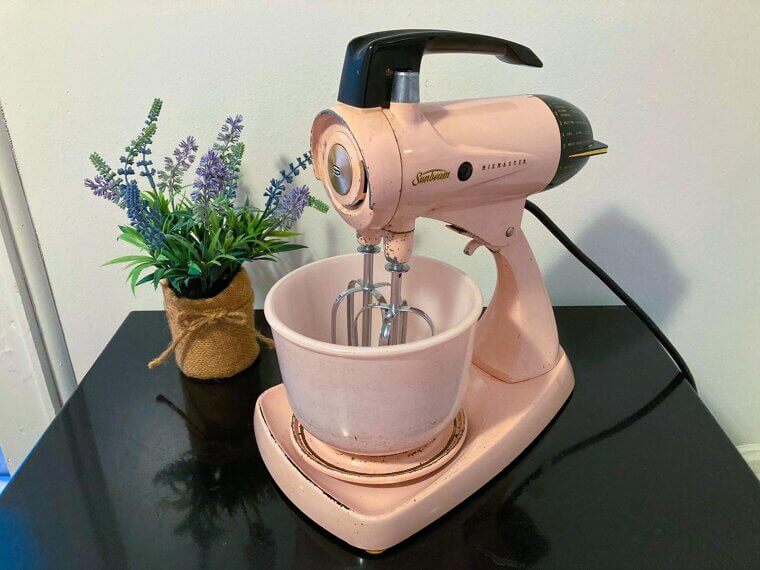
Replacement bowls and beaters are still manufactured, meaning a 60-year-old Mixmaster can be fully restored to working order. Some bakers swear the old motor runs smoother than anything made today.
Avocado Green Appliances in Kitchens
Someone in the late 50s looked at a color wheel, pointed at avocado green, and said: put it on everything. Refrigerators, stoves, dishwashers, blenders — if it plugged in, it came in avocado. The shade was so dominant that appliance manufacturers offered it as a standard option well into the 70s. Here’s the twist: avocado green appliances are genuinely collectible now. A vintage avocado Westinghouse refrigerator in working condition can bring $400–$800 from mid-century modern enthusiasts who want the full period-accurate kitchen.
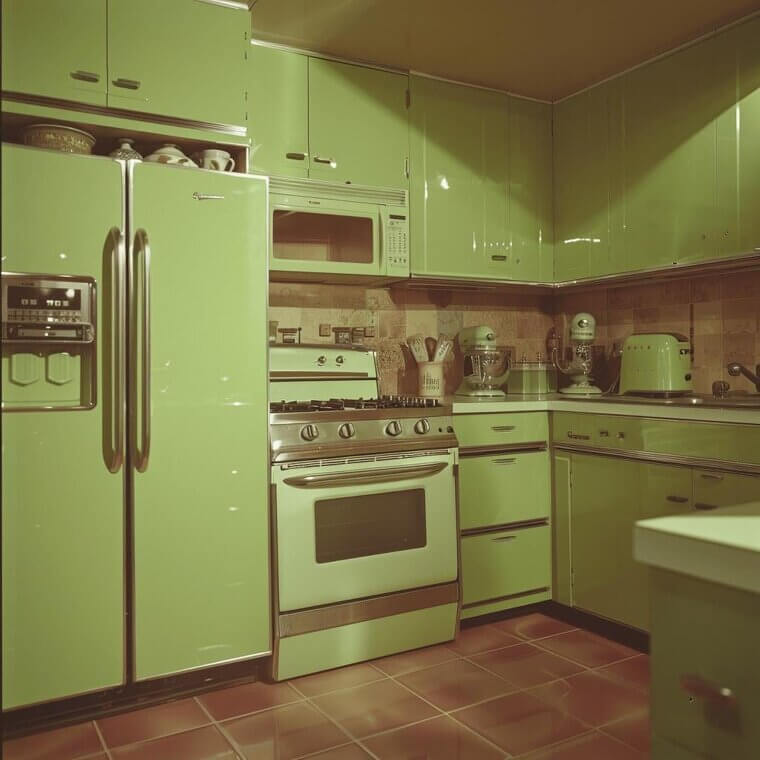
Restoration Hardware and several boutique appliance brands have released modern appliances in ‘retro green’ colorways — a direct nod to the avocado era. What was once a punchline is now a design statement.
The Trusty Wringer Washing Machine
Before the automatic washer took over, the wringer machine was how laundry got done — and it was serious work. You fed wet clothes through two rubber rollers that squeezed the water out, then hung everything on a line. These machines were built from cast iron and steel and weighed as much as a small car. Many are still functional. Maytag and Speed Queen made the most iconic versions. A restored wringer washer in working order sells for $150–$350 and is popular with off-grid homesteaders who appreciate the zero-electricity spin cycle.
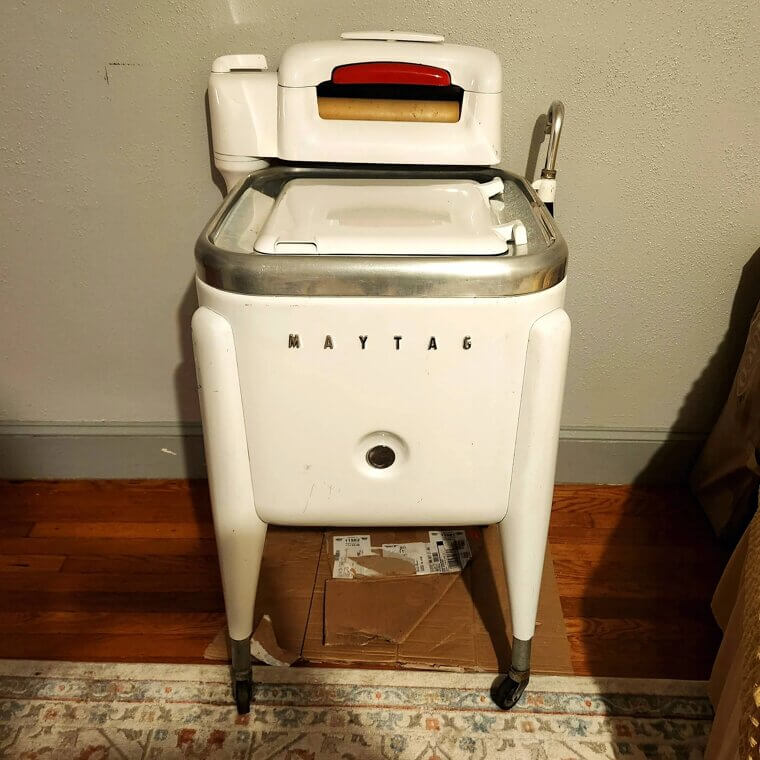
Wringer washers used about one-third the water of early automatic machines. That efficiency is exactly why a small but dedicated community of modern homesteaders still uses them daily.
Formica Countertops in Pastel Colors
Formica didn’t just cover countertops — it transformed the American kitchen. In the 50s, it came in pink, mint green, butter yellow, and coral, often with boomerang or starburst patterns pressed into the surface. It was cheap, easy to clean, and looked cheerful under fluorescent light. The irony is that original Formica in good condition is now actively sought by renovators doing period-accurate restorations. New old-stock pastel Formica sheets, when they surface at salvage yards, sell quickly at $15–$40 per linear foot.
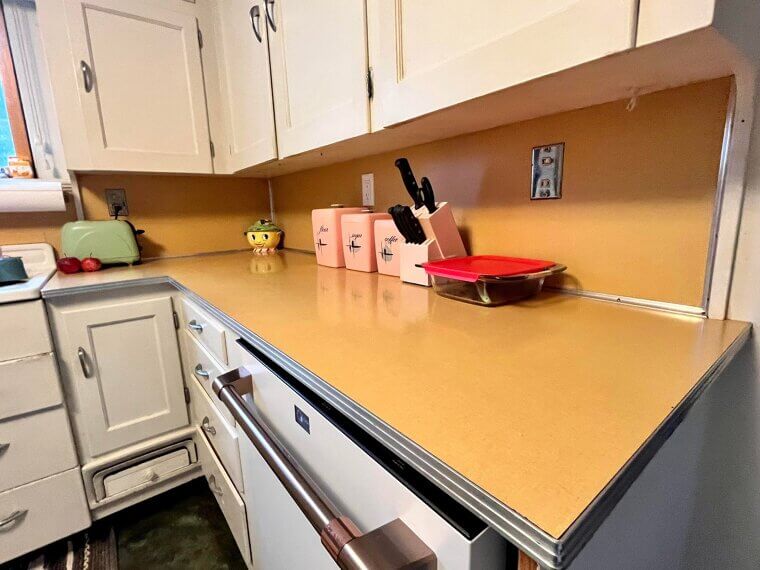
Wilsonart and Formica Group both manufacture reproduction patterns based on their 50s archives. If you want the boomerang print today, you can actually get it — and it’s not cheap.
The Elegant Vanity Dressing Table
Every bedroom in a well-appointed 50s home had one: a kidney-shaped or rectangular vanity table with a trifold mirror, a padded stool, and enough surface space for every perfume bottle, powder puff, and cold cream jar a woman owned. These were functional furniture and a daily ritual space rolled into one. Mahogany and walnut versions with original mirrors and matching stools are the most valuable. A complete set in good condition — table, mirror, stool — regularly sells for $250–$600 at auction.
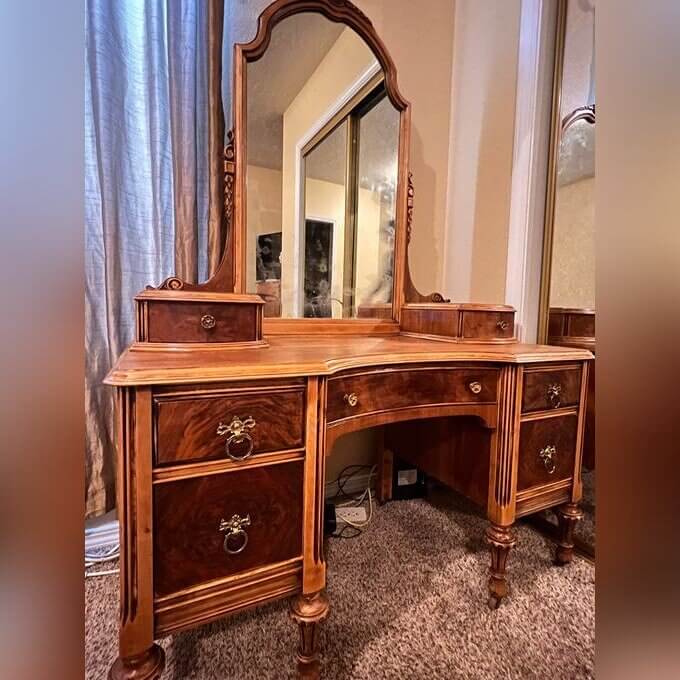
The kidney-shaped vanity specifically has become a mid-century collector’s item. Reproductions sell for $400+ new, which means original vintage pieces in good shape are often the better deal.
Milk Glass Vases on Every Shelf
Milk glass — that opaque, slightly translucent white pressed glass — was everywhere in mid-century homes. Vases, candy dishes, lamp bases, compotes, and planters in milk glass sat on shelves, mantels, and windowsills across America. Fenton Art Glass and Anchor Hocking were the biggest producers. Individual pieces are still very affordable: most sell for $5–$25 at thrift stores and estate sales. But complete sets and rare colored milk glass pieces — especially in pink or black — can surprise you at auction.
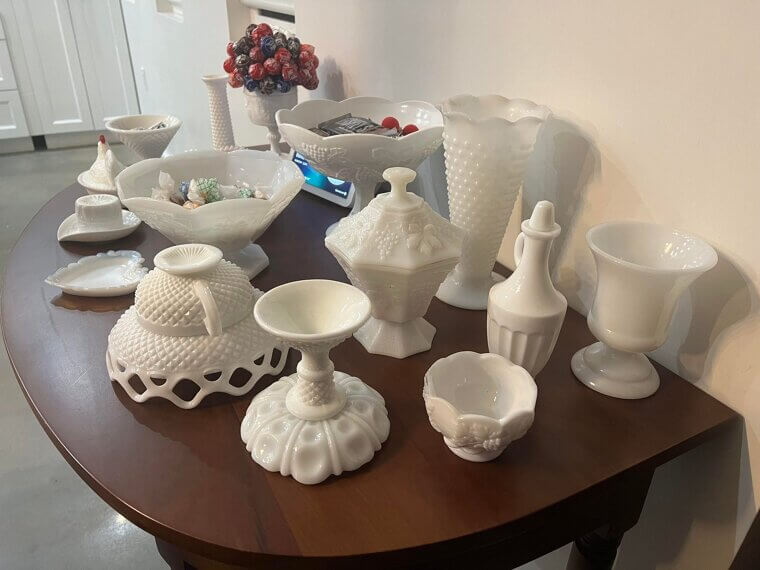
A rare Fenton milk glass epergne — a multi-arm centerpiece — sold at a 2023 auction for $320. Most milk glass is still a bargain, but knowing the makers and molds matters enormously.
The Iconic Sunburst Wall Clock
Would you pay three figures for a clock that doesn’t even have numbers on its face? Plenty of people will. The sunburst wall clock — with its starburst of brass, gold, or teak spokes radiating from a small central dial — became the defining decorative object of the late 50s. Howard Miller made the most coveted versions, some designed by George Nelson. A standard sunburst clock sells for $75–$150. A verified George Nelson design for Howard Miller? That’s a different conversation entirely — think $400 to $1,200.
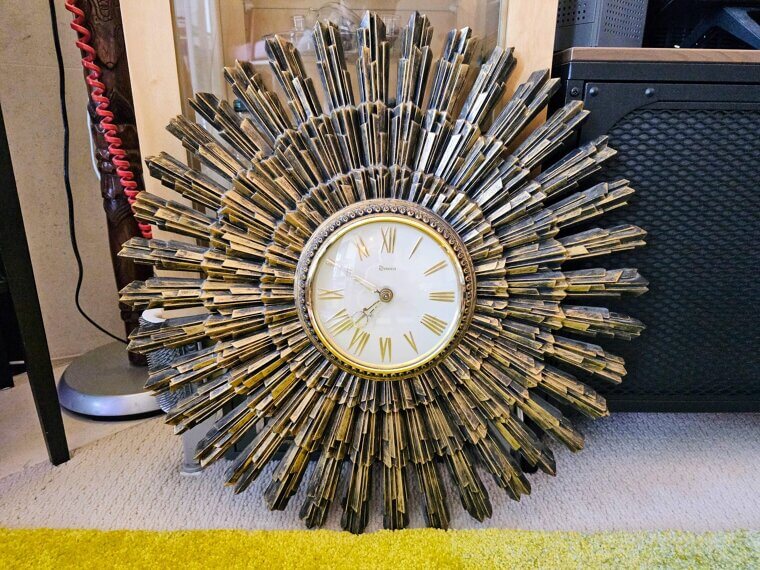
George Nelson’s ‘Asterisk’ and ‘Ball’ clocks for Howard Miller are now displayed in design museums. Original examples with intact spokes and working movements regularly appear at major auction houses.
Shag Carpet in Every Living Room
Picture this: a living room floor buried under three inches of rust-orange or harvest gold carpet, so thick your feet disappeared. Shag carpet arrived in American homes in the late 50s and absolutely refused to leave for two decades. It was aspirational — a sign that you could afford something luxurious and impractical. Today it’s back in a big way. Interior designers are specifying high-pile wool shag for modern spaces, and vintage shag remnants in good condition sell at estate sales for surprisingly strong prices.
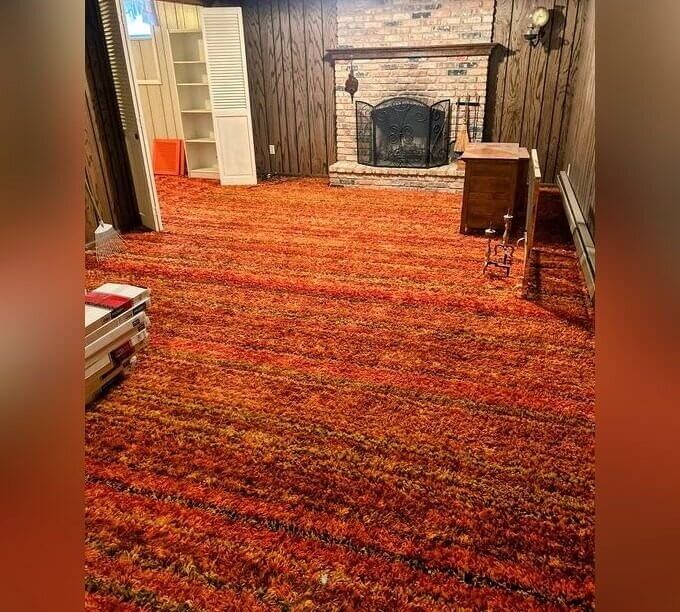
New shag carpet styled after 60s originals now runs $8–$20 per square foot from specialty retailers. The irony? Homeowners who ripped it out in the 80s are paying to put it back in today.
Macrame Hanging Planters in Windows
Macrame had a moment in the 60s that lasted about fifteen years and then vanished — until Instagram brought it roaring back. Hanging planters knotted from jute or cotton rope held spider plants and pothos in front of every sunny window in America. Handmade vintage macrame planters from the era are genuinely hard to find in good condition because natural fibers degrade. When they do surface at estate sales, they sell for $15–$40. New handmade versions from Etsy artisans run $35–$120 depending on complexity.
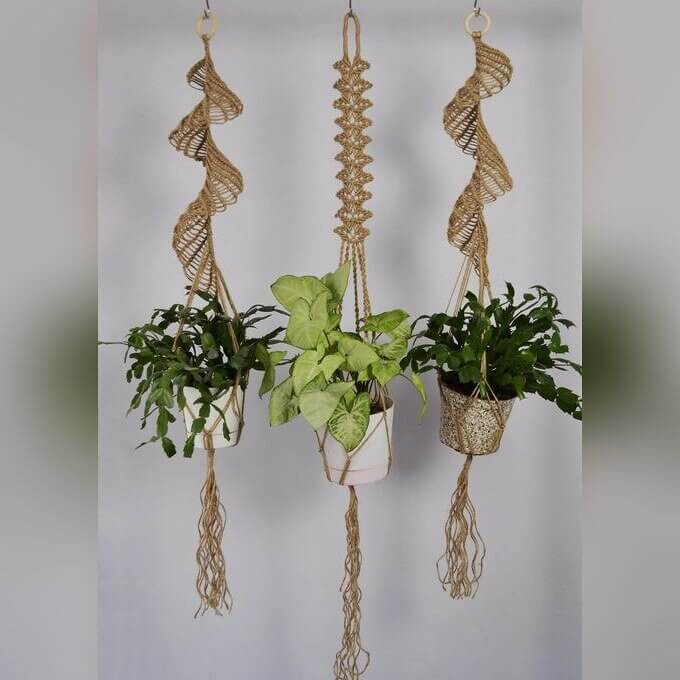
The macrame revival is real and sustained — not just a trend blip. Craft stores report that macrame cord is now one of their consistently top-selling DIY supplies, outselling many digital-age crafting materials.
The Charming Boomerang Print Furniture
The boomerang print — that abstract, kidney-and-curve pattern lifted straight from mid-century atomic design — didn’t just live on Formica. It showed up on upholstery, wallpaper, and laminate furniture surfaces throughout the 50s. Coffee tables and side tables with boomerang-print laminate tops are some of the most sought-after pieces in mid-century furniture collecting today. A clean example with original legs and minimal surface damage sells for $180–$450. Damaged pieces get snapped up by restorers who know how to source reproduction laminate.
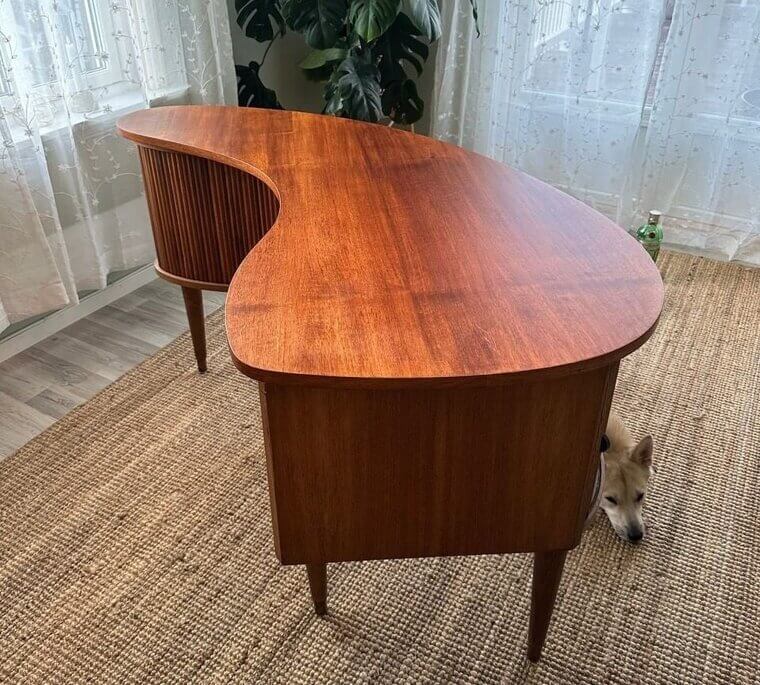
The boomerang shape itself was borrowed from post-war optimism — the curved, forward-moving form was meant to signal progress. Sixty years later, it signals ‘this person has excellent taste in vintage furniture.’
The Beloved TV Tray Dinner Set
The TV tray dinner set was a monument to a very specific American aspiration: eating in front of the television without spilling on the good furniture. A set of four folding metal trays with a matching stand was standard issue in 50s and 60s living rooms. Most featured printed designs — flowers, autumn leaves, or abstract patterns. Complete sets of four with original stands sell for $35–$85 at estate sales. Sets with unusual graphics or in excellent painted condition push higher.
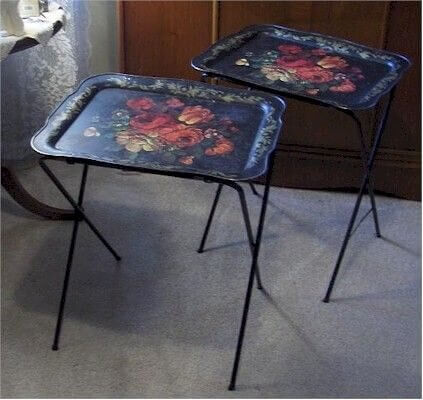
TV tray sets are one of the most consistently available mid-century items at estate sales — and one of the most consistently underpriced. They’re also completely functional, which is more than you can say for a lot of vintage decor.
Pastel Pink Bathrooms With Tile
Here’s a number: 5 million. That’s roughly how many pink-tiled bathrooms were installed in American homes between 1950 and 1965. Mamie Eisenhower loved pink, the tile industry ran with it, and suddenly bathrooms across the country were floor-to-ceiling pink ceramic. Homeowners spent decades ripping them out. Now preservationists and mid-century enthusiasts are fighting to save them — and succeeding. The website ‘Pink is the New Blog’ has documented thousands. Original pink tile bathrooms add measurable value to period homes on the real estate market.
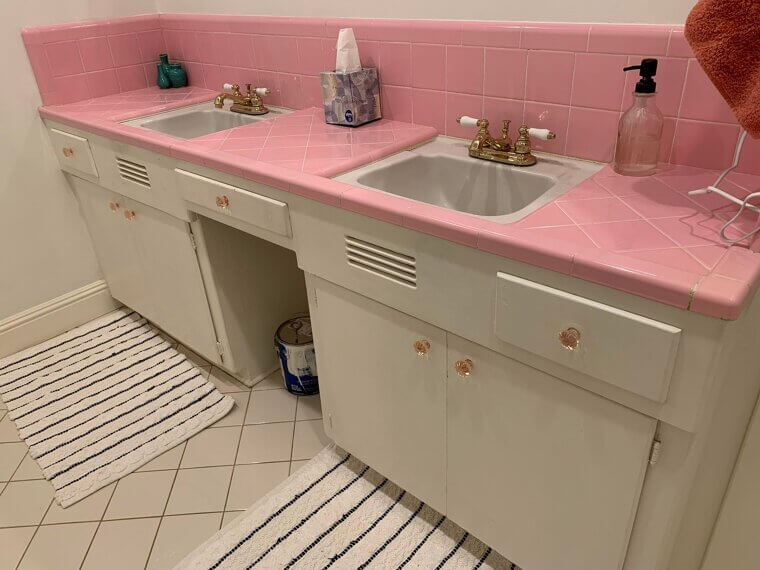
Replacement pink tile in the original 4×4 size is now manufactured again specifically because demand from restoration projects has grown. A bathroom that survived intact is considered an asset, not a liability.
The Charming Ceramic Cookie Jar
The ceramic cookie jar sat on every kitchen counter and held everything from actual cookies to spare change to the car keys. 50s and 60s cookie jars came in every shape imaginable — barn houses, smiling pigs, mammy figures, cartoon characters, and vegetables with faces. American Bisque, Metlox, and McCoy were the major makers. Most common examples sell for $25–$60. But rare character jars — especially licensed designs or limited production figures — can hit $300 to $800 at specialized auctions.
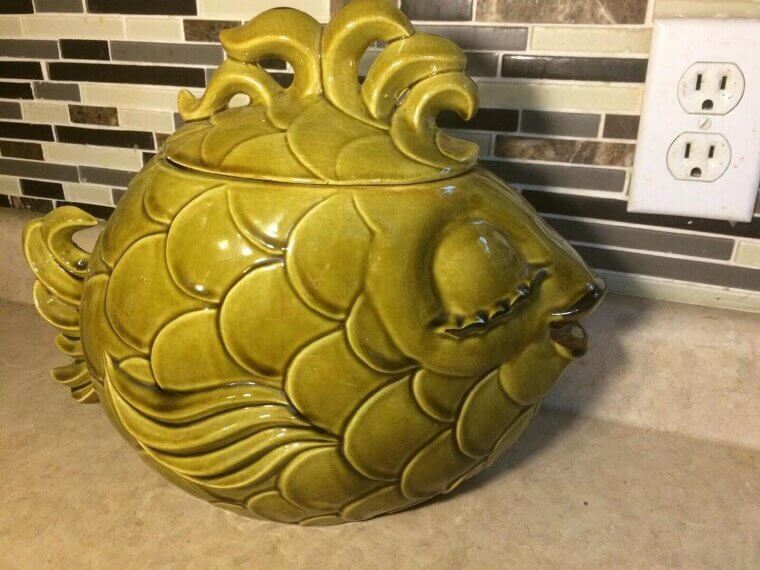
McCoy pottery cookie jars are among the most collected American ceramics. A rare McCoy ‘Mammy’ jar in excellent condition sold for over $1,000 at a 2022 auction — proof that cookie jars are serious business.
Flocked Wallpaper on Dining Room Walls
$500 for wallpaper. That’s what a full roll of original 60s flocked wallpaper — the kind with raised velvet-like patterns that felt like touching a painting — costs when it surfaces at architectural salvage dealers. Flocked wallpaper was the height of dining room sophistication in the late 50s and 60s, coming in deep reds, golds, and greens with damask or medallion patterns. It was expensive then and it’s expensive now. New reproduction flocked wallpaper from specialty manufacturers runs $85–$200 per roll.
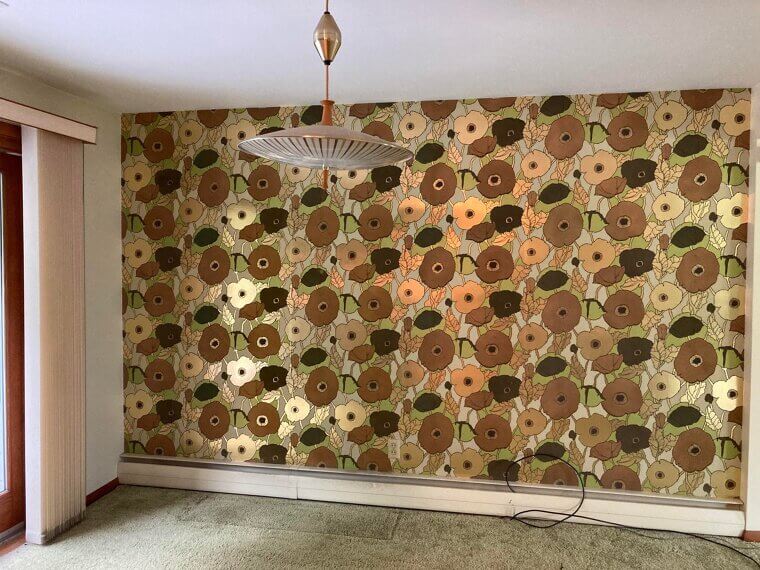
Flocked wallpaper fell out of fashion so completely that most of it was stripped and discarded. Intact rooms discovered during renovation are photographed and documented by preservation groups before the paper comes down.
Matching Bedroom Furniture Sets in Wood
Bedroom sets in the 50s and 60s came as matched suites: headboard, footboard, dresser, mirror, nightstands — all in the same wood finish, all from the same manufacturer. Bassett, Broyhill, and Drexel were the dominant names. These sets were built from solid wood and real veneer, not particleboard, which means they’ve survived remarkably well. A complete Drexel Heritage bedroom set in walnut with all original hardware sells for $800–$2,500 depending on condition and the specific line. Individual pieces sell for less but move faster.
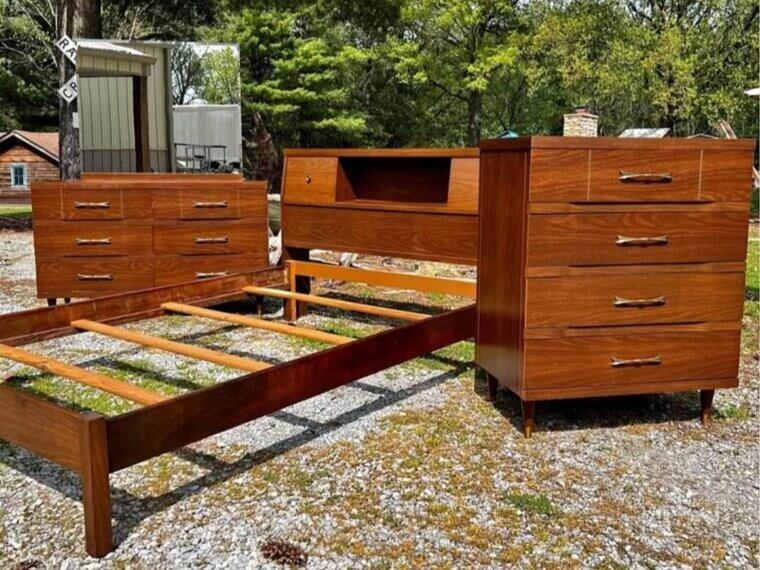
Broyhill’s ‘Brasilia’ line — with its sculptural carved headboards — has become one of the most collected mid-century bedroom sets. A complete Brasilia suite in excellent condition commands a serious premium at mid-century furniture dealers.
The Handy Swing Arm Wall Lamp
The swing-arm wall lamp was a masterpiece of mid-century functional design — a lamp that could pivot, extend, and angle to put light exactly where you needed it, without taking up table space. Manufacturers like Lightolier and Arredoluce (in Italy) made iconic versions. This is where prices start to get interesting. A basic American swing-arm lamp from the 50s sells for $75–$200. An authenticated Arredoluce Italian model? That’s $800 to $3,000, depending on the designer. The same basic function, wildly different provenance.
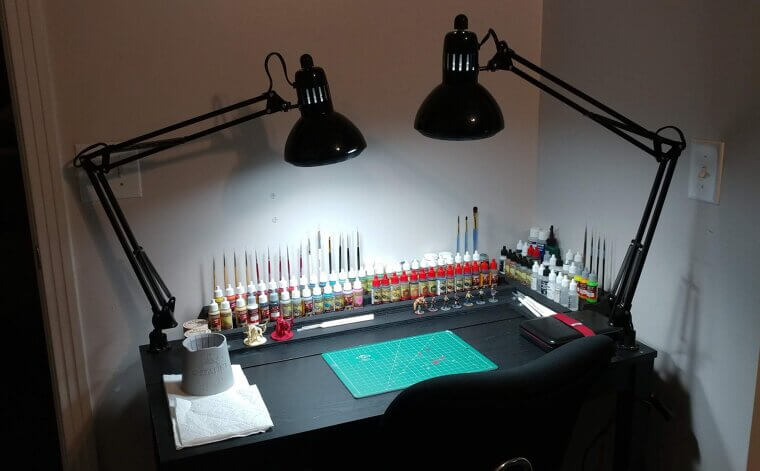
Gino Sarfatti’s swing-arm designs for Arredoluce are now in permanent museum collections. When originals surface at auction, bidding from European and American collectors gets aggressive fast.
The Reliable Toastmaster Pop-Up Toaster
Test it in the morning, every morning, for twenty years — and it still works. That was the Toastmaster experience. The Toastmaster pop-up toaster, introduced in the 20s and perfected through the 50s, was the standard by which all other toasters were judged. Chrome body, clean lines, and a mechanism so reliable that many examples are still in daily use. A clean, working 50s Toastmaster in original chrome sells for $35–$85. The 1B14 model — with its distinctive art deco styling — consistently brings the highest prices.
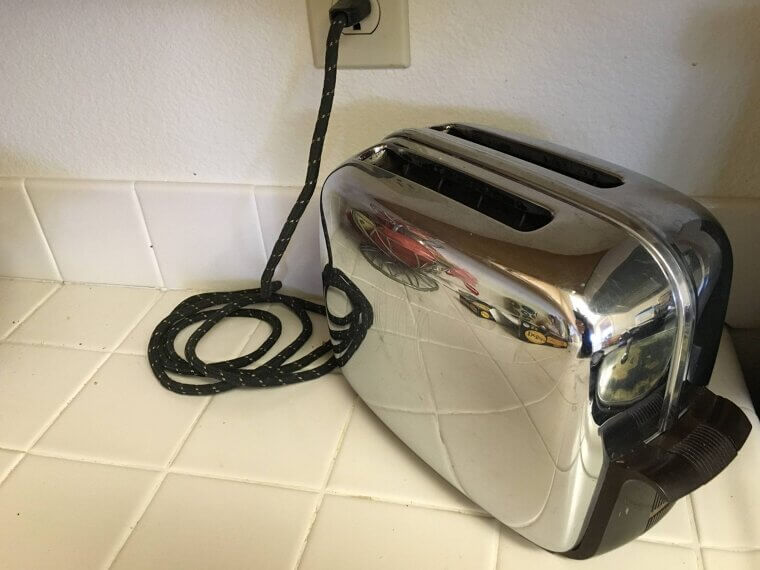
Toastmaster’s engineering was so sound that the company’s patents shaped the entire toaster industry. Collectors specifically seek models with original cord sets and intact chrome, since replating is expensive and obvious.
Terrazzo Floors in Mid-Century Homes
Terrazzo floors — that mixture of marble chips, granite, and glass set in cement and polished smooth — were everywhere in mid-century homes, schools, and public buildings. They were durable, beautiful, and labor-intensive to install. When wall-to-wall carpet became affordable in the 60s, millions of square feet of terrazzo got covered up and forgotten. Renovation crews are still uncovering it today, usually in perfect condition under the carpet. Restoring existing terrazzo runs $3–$8 per square foot. Installing new terrazzo? $15–$30 per square foot.
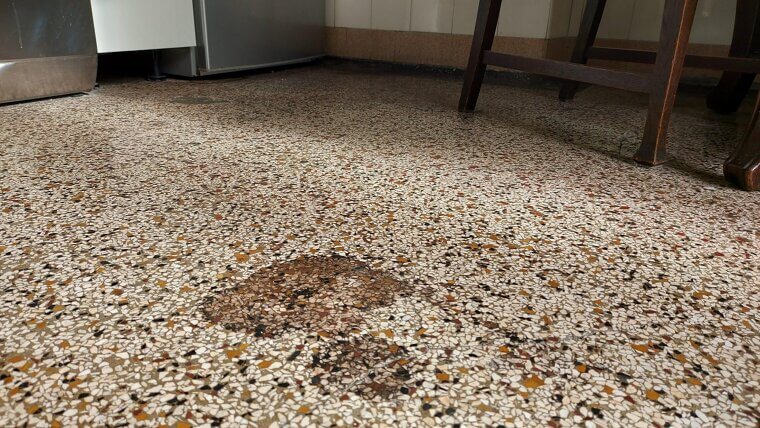
Designers who specialize in mid-century restoration say discovering intact terrazzo under carpet is like finding buried treasure. The material has outlasted every flooring trend that tried to replace it.