Creating a “Forever Home” isn’t about installing clinical-looking equipment; it’s about clever, stylish modifications that keep you independent and safe. From lighting secrets to ingenious grip hacks, these tips will transform your space into a secure sanctuary that still looks and feels like home.
The “Invisible” Designer Grab Bars
Forget the cold, stainless steel bars found in public restrooms. Modern hardware companies now offer “designer” grab bars that double as stylish towel racks or toilet paper holders. These dual-purpose fixtures are engineered to support up to 250 pounds while blending seamlessly with your bathroom aesthetic. By replacing a standard towel bar with one of these reinforced versions, you gain a sturdy point of stability for getting in and out of the shower without sacrificing your home’s decor.
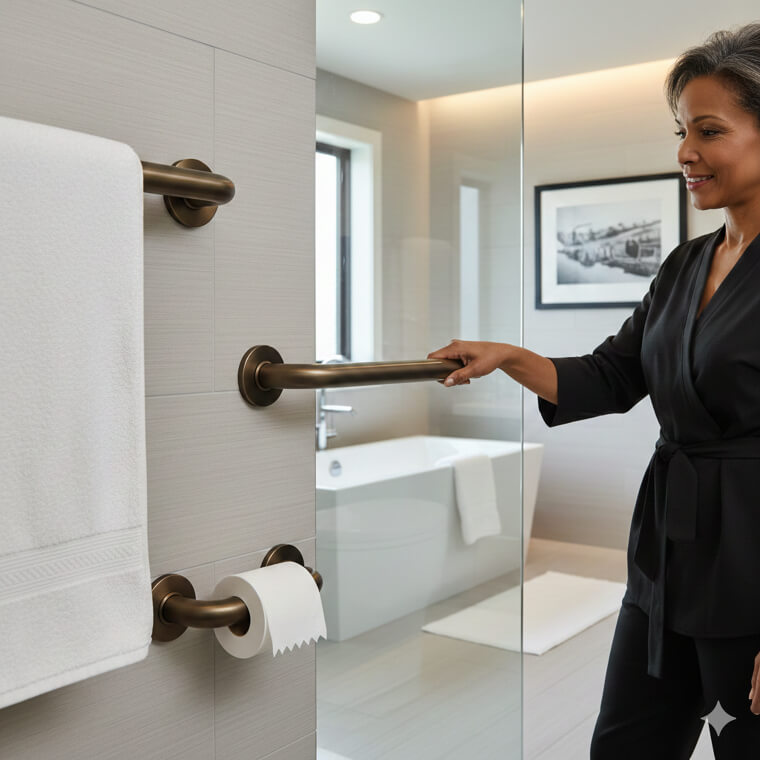
It’s a subtle safety upgrade that guests will never even realize is an assistive device.
Glow-In-The-Dark Tape for “Stair Ghosts”
Navigating stairs in the middle of the night can be daunting, especially if the overhead lighting is too harsh for sleepy eyes. A clever hack involves applying a thin strip of high-visibility, photoluminescent tape to the very edge of each step. This creates a soft, glowing guide that defines the depth and width of each tread without requiring you to fumbling for a light switch.
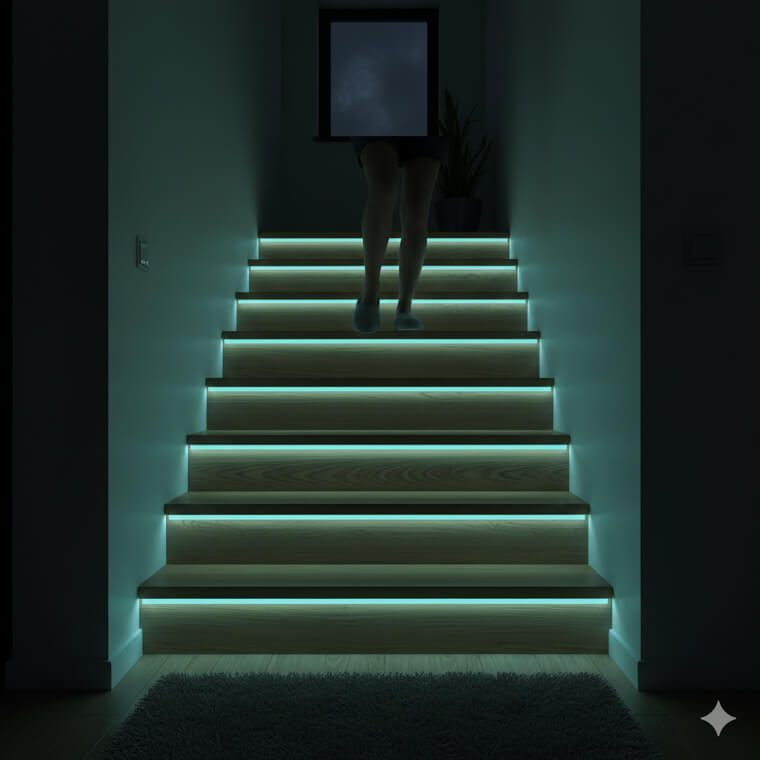
This “silent navigator” is reportedly a favorite among interior designers who want to maintain a minimalist look while ensuring that every step is clearly visible during midnight trips to the kitchen.
The “Double-Sided” Rug Secret
Area rugs are the primary culprits for household trips, but you don’t have to get rid of them to stay safe. Instead of using cheap foam pads, look for professional-grade “rug-to-floor” tape or silicone corner grippers. These thin, non-permanent adhesives fuse the rug to the floor surface, preventing the dreaded “corner curl” that catches onto slippers. By ensuring the edges are completely flush with the floor, you create a flat walking surface.
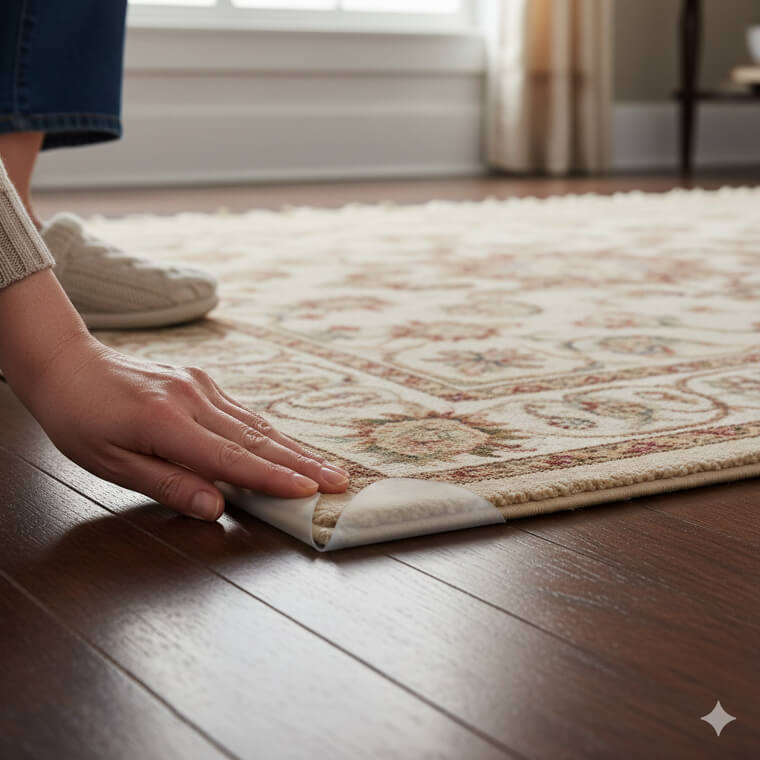
This simple tweak provides the warmth of a rug with the safety of a flat, predictable hardwood floor.
Rocker Switches for “Elbow Lighting”
Standard toggle switches can be difficult to manipulate if you’re carrying groceries or have stiff joints. Replacing them with wide “rocker-style” switches is a game-changer. These flat panels allow you to turn lights on or off with a simple nudge of your elbow or the side of your hand. It’s a low-cost electrical swap that makes a house feel modern and accessible.
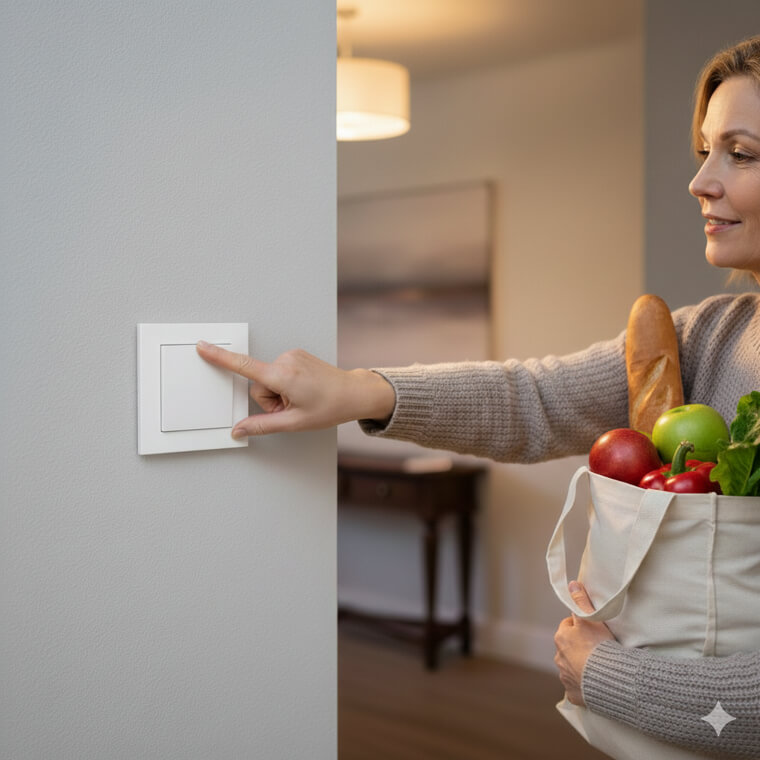
Many homeowners reportedly find that the larger surface area of the rocker switch is much easier to locate in the dark, reducing the time spent fumbling along the wall.
Contrast Strips on “Hidden” Thresholds
Small transitions between rooms, like the lip between a carpeted hallway and a tiled bathroom, are easy to miss. To make these “hidden” hazards more obvious, use a transition strip in a contrasting color. If your floors are light oak, use a dark walnut or bronze transition strip. This visual cue tells your brain exactly where the floor level changes, even if the height difference is less than an inch.
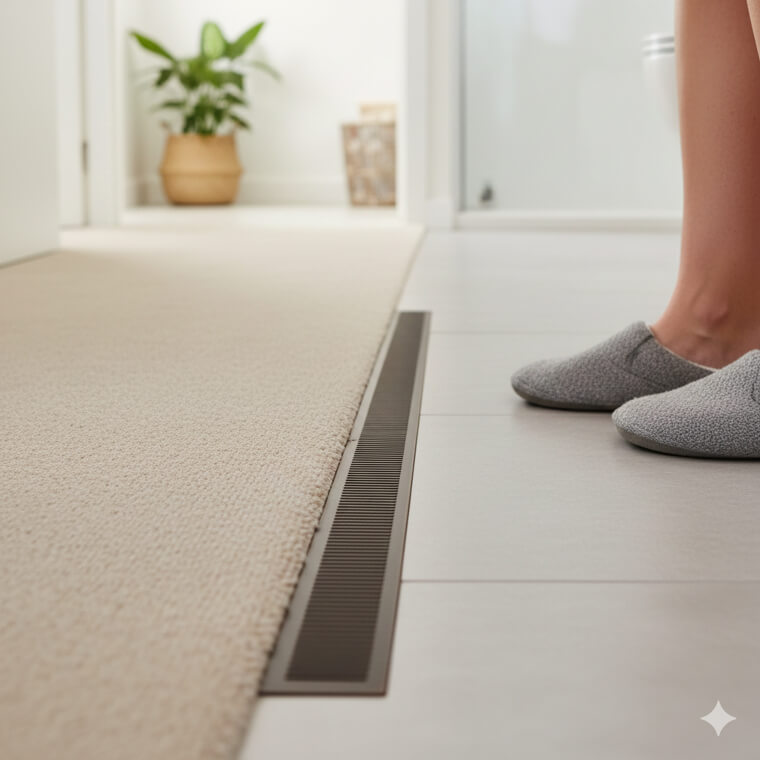
It uses the science of visual perception to prevent stumbles, turning a potential trip hazard into a deliberate, stylish design element.
Motion-Activated “Toe-Kick” Lighting
One of the most surprising ways to prevent falls is by installing LED light strips under your kitchen or bathroom cabinets—the area known as the “toe-kick.” When these are paired with a motion sensor, they cast a soft glow directly onto the floor the moment you enter the room. This illuminates the path for your feet without the blinding glare of overhead lights, which can cause temporary “night blindness.”
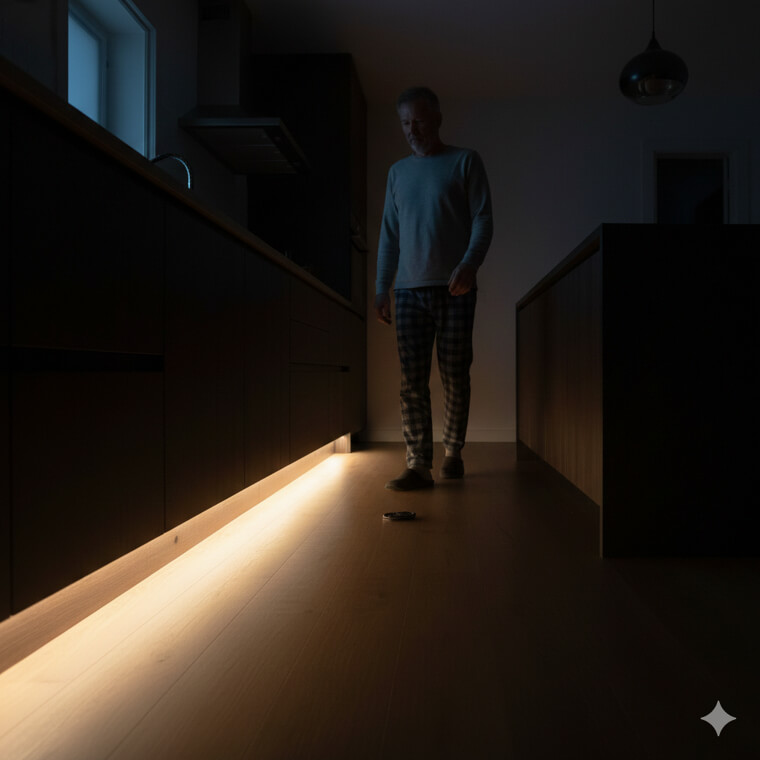
It creates a high-end, resort-like ambiance while ensuring you never have to navigate a dark kitchen for a glass of water.
The “Off-Center” Cabinet Pull Hack
Standard cabinet knobs can be hard to grasp, especially if they are small and slippery. A stylish alternative is to install extra-long D-shaped pulls and mount them slightly higher or lower than the traditional center point. This placement reduces the reach required and provides a much larger surface area to hook a finger through. By choosing pulls with a high-contrast finish—like matte black on white cabinets—you make the “action point” of the cabinet instantly recognizable.
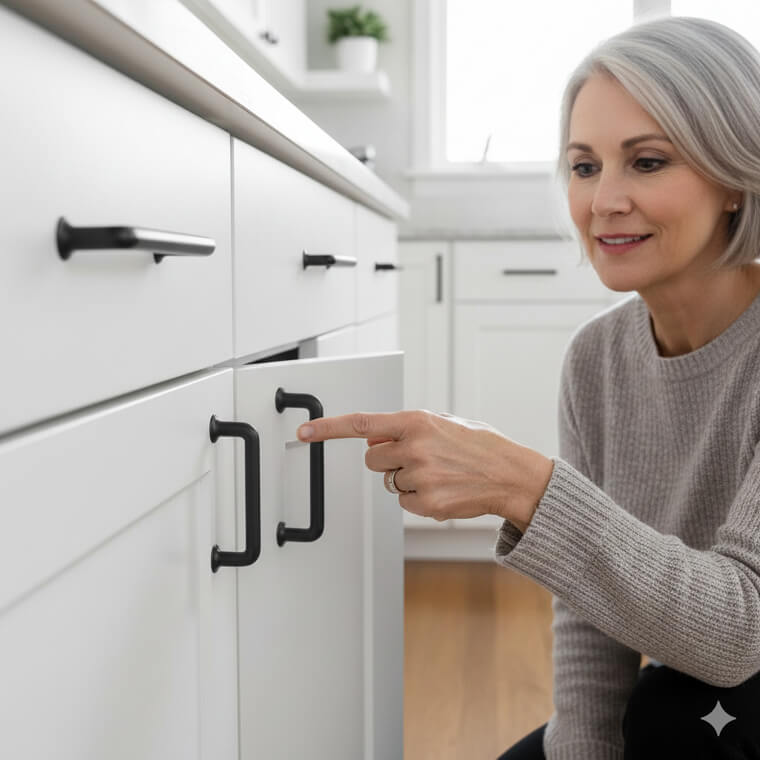
That helps significantly during times when your vision might be slightly blurry or tired.
Non-Slip “Clear” Coating for Tile
Many people avoid beautiful stone or tile floors because they fear they become ice-skating rinks when wet. However, there are now “clear-grip” sprays and treatments that add a microscopic texture to the surface without changing the look of the tile. This treatment increases the “coefficient of friction,” meaning your feet (or slippers) have more traction even on a damp bathroom floor. It is reportedly much more effective than bulky rubber mats.
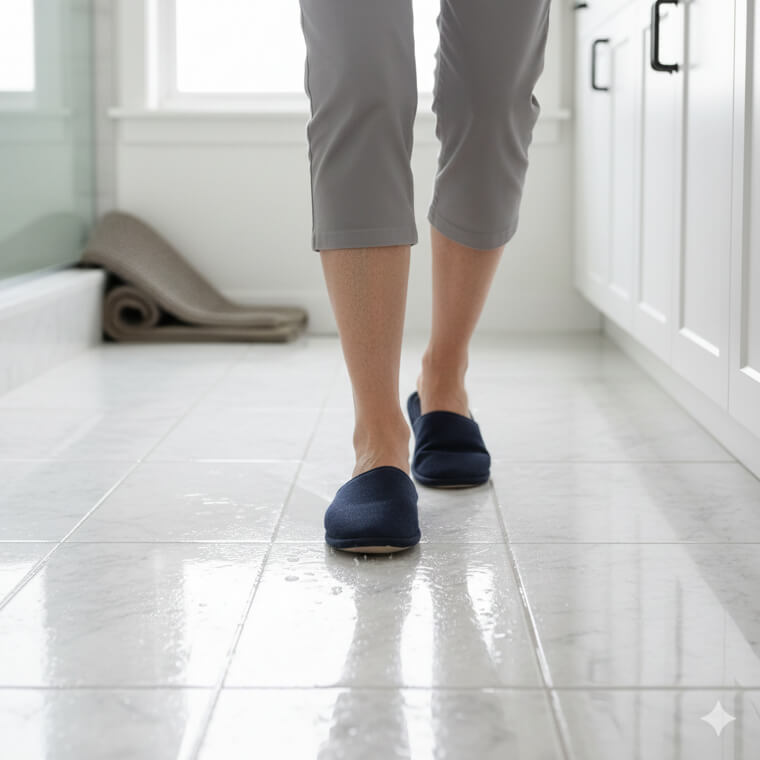
Those can accumulate mold and actually create a different kind of trip hazard by bunching up over time.
The “Lazy Susan” for High Shelves
Reaching for heavy jars on high shelves can lead to lost balance. By installing a “Lazy Susan” (a rotating turntable) on your upper cabinet shelves, you bring items from the back to the front with a simple spin. This eliminates the need to stand on tiptoes or use a precarious step stool. When you can access everything within a comfortable “strike zone” (between your waist and shoulders), the risk of losing your balance while reaching is significantly reduced.
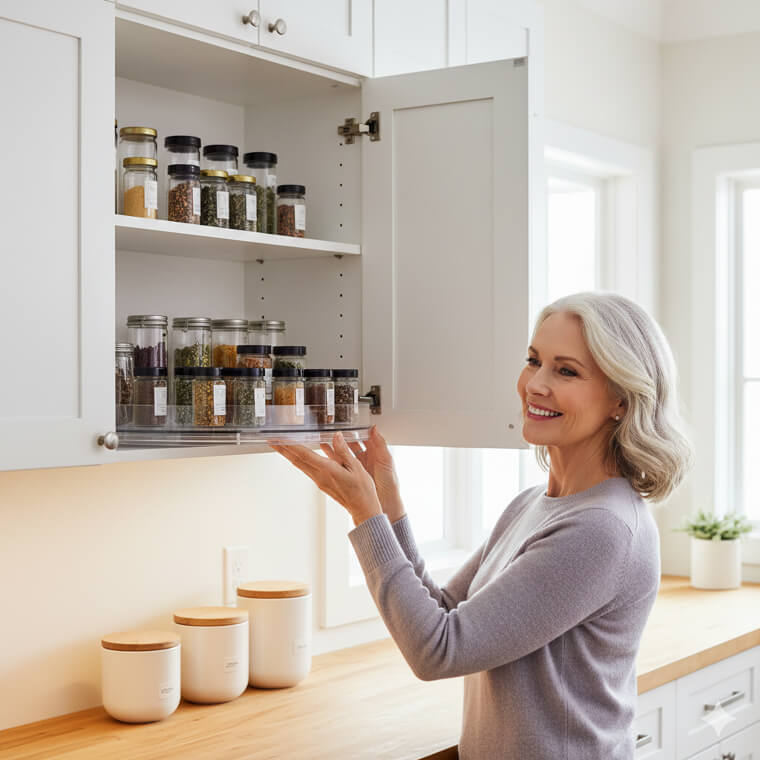
It’s an organizational win that keeps your feet firmly planted on the ground while allowing you to reach any everyday necessities.
The “Contrast Rim” Plate Trick
While this isn’t a structural house tweak, it’s a vital “forever home” hack for the dining room. As we age, our depth perception can subtly change. Using dinnerware with a high-contrast rim—such as a white plate with a navy blue border—helps you clearly see the edge of the plate against the table. This reportedly reduces the chance of accidentally pushing food off the edge.
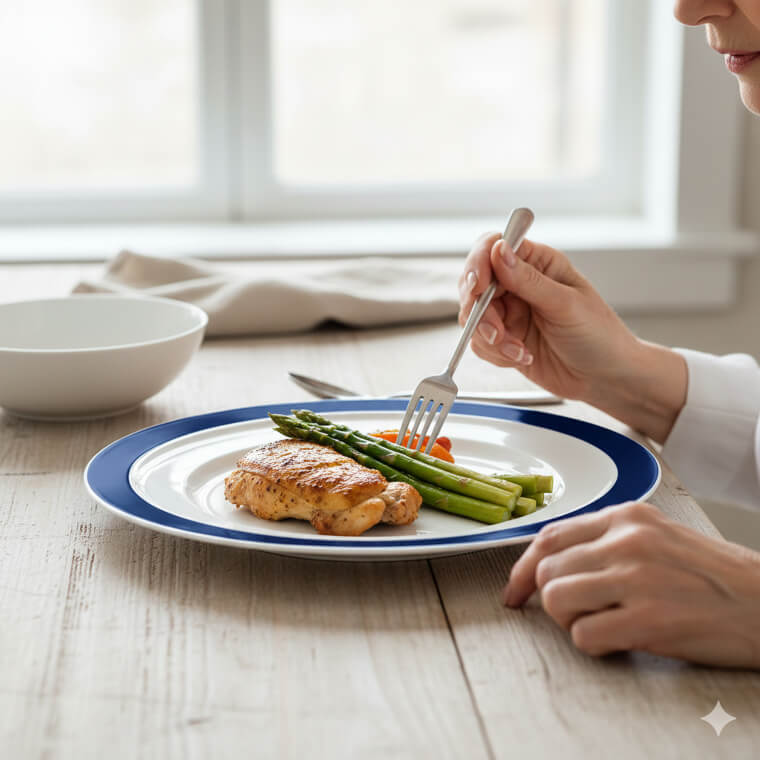
Or of misjudging where the plate ends when setting down a glass. It’s a simple, elegant way to make mealtime safer and more enjoyable.