Sometimes we forget there’s so much more to the world than the standard tourist attractions and historic sites we tend to see people visit on social media. From ancient villages to discoveries that give a new glimpse into humankind’s story, there are plenty of rarely seen and even strange places all around the globe. And you don’t need to hop on a plane to get a glimpse of these beauties – we’ve got you covered with beautiful photos of these unique destinations and one-of-a-kind finds.
This Beautiful Korean Folk Village Is Frozen in Time
The photo below shows a traditional ‘Folk Village’ located at the Southwestern end of the Korean Peninsula. More specifically, in the Jeollanam-Do region, not far from Sunch’eon. Aside from its stunning beauty, the village is unique because of its people’s way of life. The homes are the town’s original structure, made with straw roofs and clay rooms. About 100 households still reside here, primarily farmers who continue living according to the area’s traditional lifestyle.

It’s a big go-to destination for Korean parents who want to show their kids what life was like in the past – and it’s not hard to see why it’s a popular place to visit.
These 20,000-Year-Old Armadillos Weighed About 2 Tons Each
What the earth can preserve in the ground beneath our feet never ceases to amaze us. Here, we’re looking at a family of giant armadillos, said to be an astonishing 20,000 years old. Discovered by an Argentine farmer, these beauties were found buried near a river. Interestingly, all these creatures were looking in the same direction, so experts reckon these armadillos were all traveling towards the same thing. Which makes us curious as to what they were looking at – or what they were running away from.
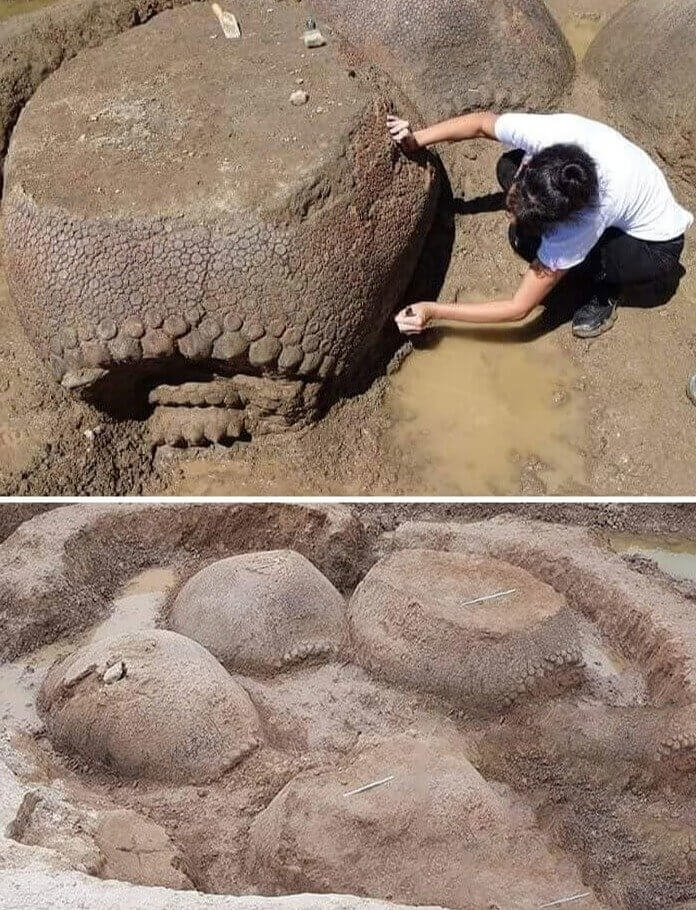
Astonishingly, the largest of these beasts was the equivalent of a Volkswagen Beetle and was predicted to weigh as much as two tons! That’s the equivalent of a small elephant!
How Japan Makes Wood Without Chopping Down Trees
The first thing we thought when seeing this photo was, “Wow!” What’s pictured here is the Japanese method for producing wood without chopping down forests. They’ve been using this practice for seven centuries! First established in the 14th century, this technique is officially known as the ‘daisugi’ technique. The basic premise is that trees are pruned, a bit like massive bonsai trees, rather than chopping them down completely. When this technique is applied to cedar trees, the end result looks like this.
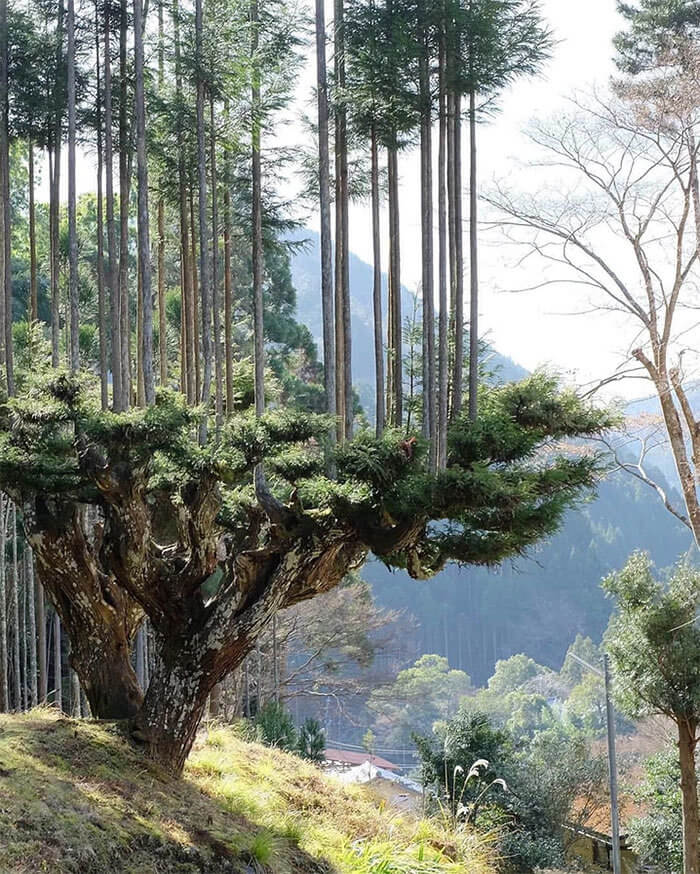
Cedar trees produce astonishingly uniform chunks of wood, making them fantastic for construction projects. As you can see in the photo, it looks like cedar trees are growing out of the base of another tree – how cool is that?
Ireland’s Redhead Convention Happens Every Year
No, your eyes aren’t deceiving you. The photo below shows red-headed people only. This is an actual event that happens every year, and if this doesn’t show how weird and wonderful the world is, then we don’t know what will. We love that one of the rarest hair colors has its very own festival dedicated to it: The Redhead Festival in Dublin, Ireland, where tons of people gather together, united by the one thing they all have in common.

Apparently, this yearly tradition has been going on for around a decade. During the event, they present several awards, including “Best Ginger Awards,” “The most freckles per square inch,” “Best Wannabe Redhead,” and “The world’s greatest ginger beard.” How cool is that?!
A 200-Year-Old Bridge That Was Built Without Any Nails
Have you ever seen such an extraordinary wooden bridge? This 200-year-old bridge can be found in the village of Gulli in the Tabasaran region of Dagestan, Russia. And the most astounding thing about it was that it was constructed without using a single nail – what a feat! How did the local residents create such a robust structure two centuries ago without nails? The idea is mind-boggling.
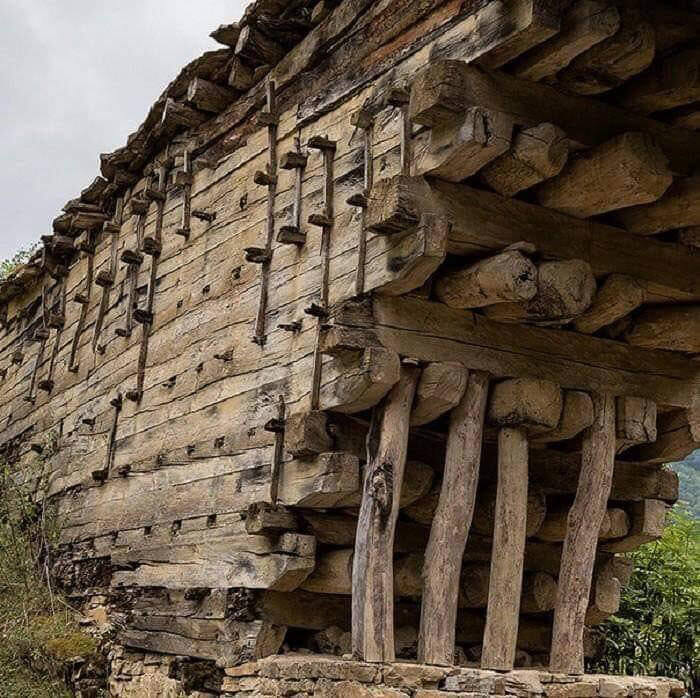
If you’re looking at this picture and thinking, “This bridge looks massive,” – you would be right. This beauty measures a whopping 10 meters high and apparently can still withstand the weight of a car!
This Tibetan Monastery’s 60-Meter Long Library Holds 84,000 Secret Manuscripts
Here is a photo of the gorgeous Sakya monastery located in Tibet. More specifically, we’re looking at a secret library in the sanctuary. These books were discovered behind a massive wall spanning 60 meters long and 10 meters high. The one-of-a-kind library boasts over 84,000 manuscripts, including a text dubbed ‘The History Of Mankind,’ over 1000 years old! Just look at the gorgeous architecture and how the scripts are neatly stacked.
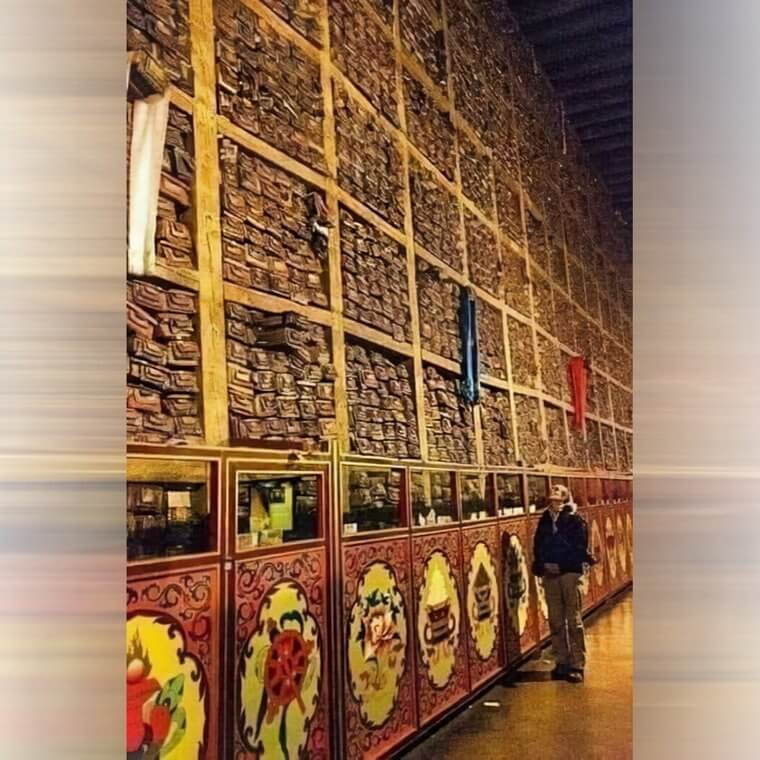
Could you imagine how long it would take to read all of this content? What stories do these texts hold? We can’t even imagine it.
This Roman Bathhouse Is Still Functional After 2,000 Years
Next, we’re looking at an authentic Roman Bathhouse constructed by Emperor Vespasian. This beautiful bathhouse, located in Khenchela, Algeria, is still used by the locals, even after a staggering 2,000 years. Not only is this ancient architecture astonishingly well preserved, but it’s also fully functional. For example, this bathhouse still generates abundant hot water that fills the open-air baths. We also love that this site is nestled among the luscious forests of the Aurès Mountains.
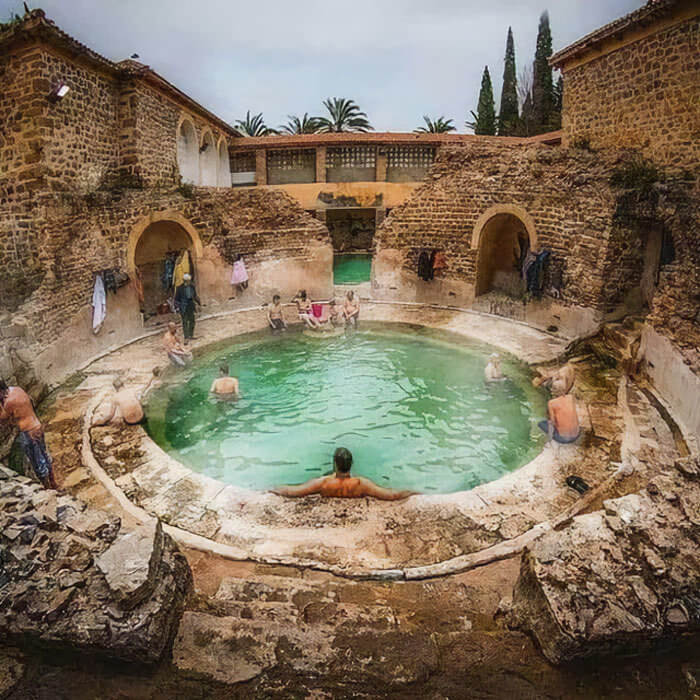
Given its ancient roots and overall magnificence, it’s no wonder this bathhouse is now classified as a protected national historical heritage site. This particular bathhouse is called Hammam Essalihine, meaning the “bath of the righteous” or the “thermal baths of Flavius.”
Ancient Greek Mosaics Discovered in Zeugma, Turkey
We can only imagine that Professor Kutalmış Görkay (of The University Of Ankara in Turkey) and his archeological team were thrilled when they uncovered these ancient Greek mosaics. This masterpiece was unearthed in the Turkish city of Zeugma, which is close to the Syrian border. Fun fact: due to nearby flooding, this excavation project was sped up for fear of the water destroying ancient artifacts. Luckily, this beauty was successfully preserved.
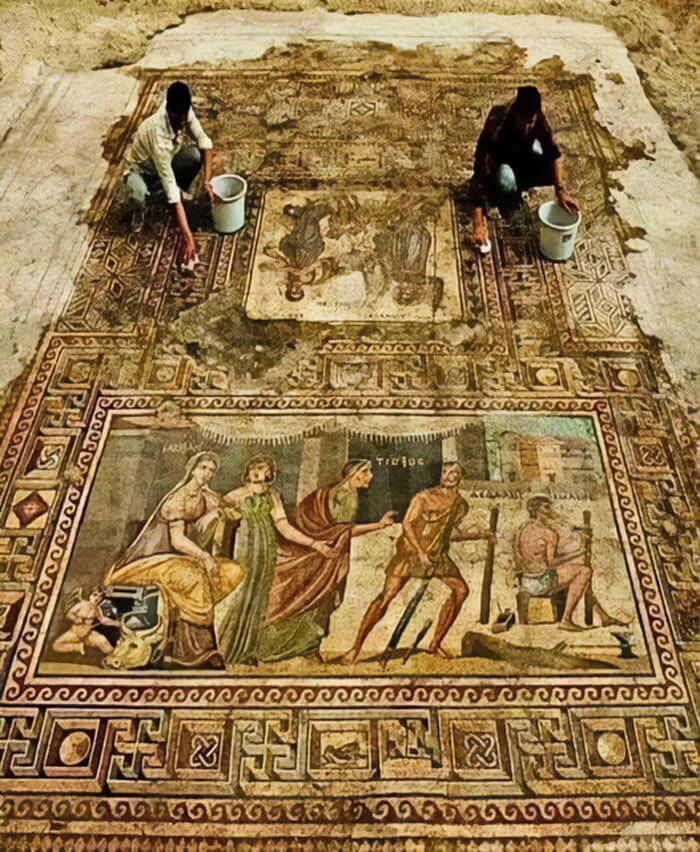
More excavations press on in the hopes of locating new relics. These particular glass mosaics date as far back as the second century BCE. We can’t help but wonder who the people depicted in the scene are. But it’s possible we’ll never know.
These Ancient Daggers Were Made From Crystal
Yes, you read correctly; the daggers pictured here are made of crystal rock. A few years back, a team of professional archaeologists excavated the megalithic tomb of Montelirio Tholos in Spain. During their time there, they uncovered these mesmerizing daggers. According to experts, these relics are some of the most technically sophisticated artifacts ever to be discovered. Professionals say it would have taken immense skill to carve such a knife.
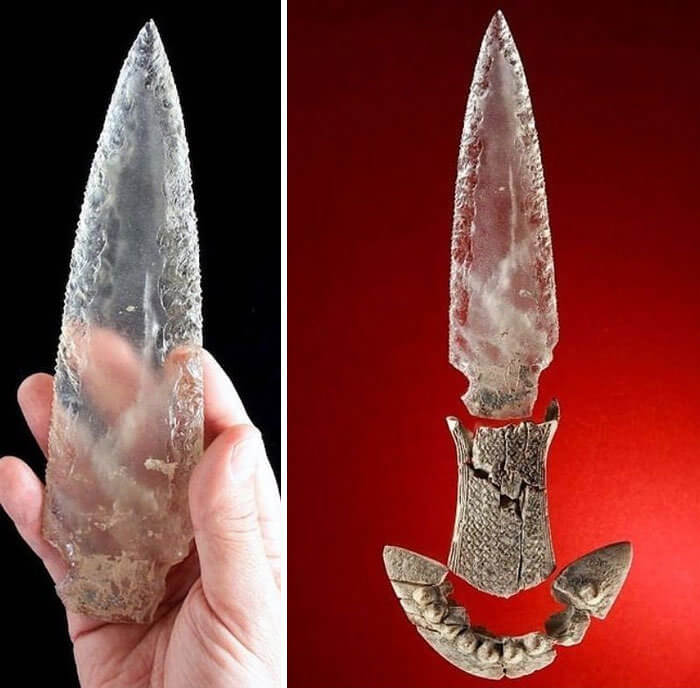
These daggers are said to be around 5,000 years old and are 8.5 inches long. As beautiful as this find is, we can’t help but shudder to think what it was used for!
Take a Second Look – Those Aren’t Real Fish
We love that this fish pond mosaic created by Gary Drostle looks 3D. The shadow effect under the fish is clever, and the spherical ripples heighten this artwork’s depth and 3D effect. It’s hands down the most life-like mosaic we’ve ever seen. In fact, we thought these were real fish at first! Unsurprisingly, Gary is an award-winning artist who specializes in murals and mosaics. This particular masterpiece was created for a small public garden in Croydon, Surrey, UK.
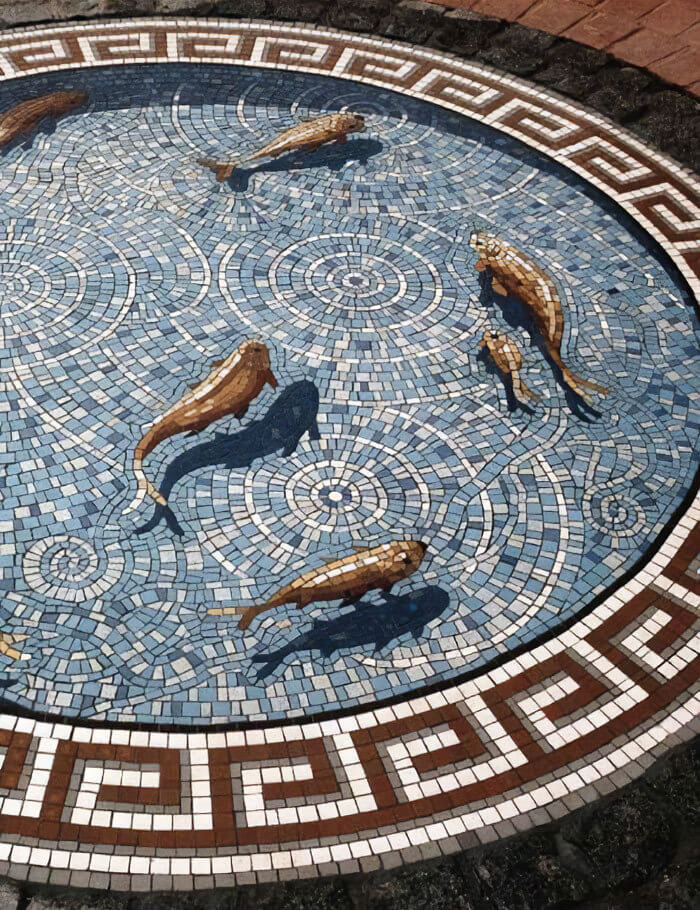
This piece dates back to 1996 and is made of vitreous ceramic tesserae. It’s nothing short of stunning – we can’t help but think it would make an excellent design for the bottom of a swimming pool!
People Still Live in This 2,000-Year Old Isolated Village
Wae Rebo is one of the last remaining ancient villages in the world. It’s incredibly isolated, high in the jungle-strewn mountains off Flores Island, Indonesia. This settlement sits at an astonishing altitude of 4,200 feet and for nearly 2,000 years has been occupied by the Manggaraian people. As you can see, there are eight traditional conical thatched homes. We love that this picture captures the mist circling the homes, giving the village a somewhat mystical vibe.
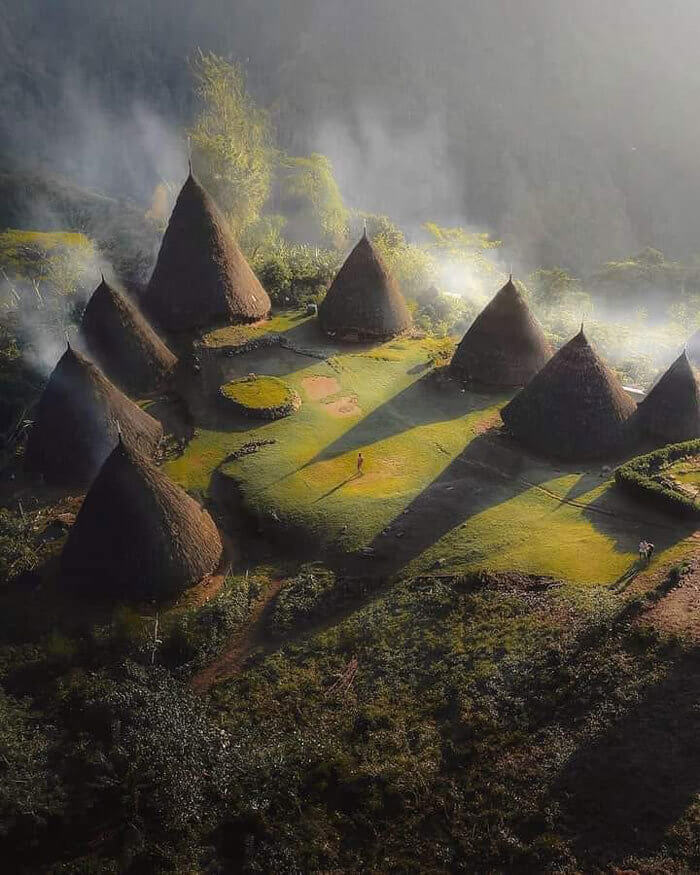
The occupants have planted crops like coffee, vanilla, and cinnamon on the land surrounding this village. The villagers then sell these goods at their local market, around 15 kilometers away.
French Medieval House From 1509 Is Straight Out of a Fairytale
How gorgeous is this medieval house? This beautiful cottage is nestled in the French village of Argentan and dates back to 1509. With that in mind, its condition is incredible! It looks like the kind of house pulled straight out of a fairytale. Does it get much more idyllic than this? We think not. However, we did some digging, and some say that this house wasn’t actually constructed in 1509.
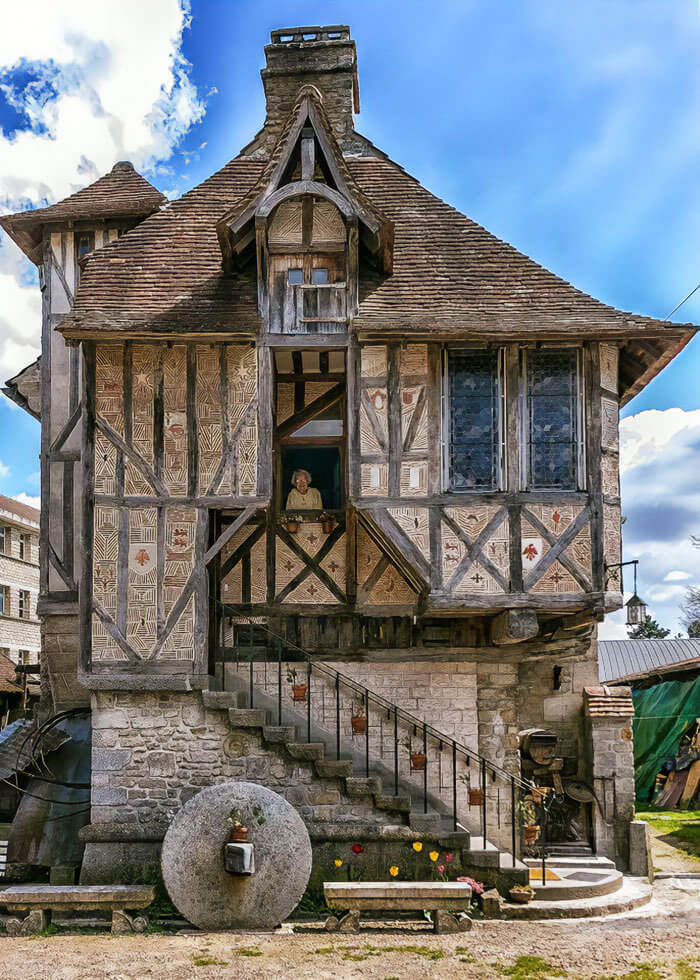
Some sources say it was built in 1955 to replicate a 16th-century property because, sadly, most of Argentan was destroyed during WW2. Either way, this property is still a work of art!
Warship Retrieved After 333 Years at the Bottom of the Ocean
This Vasa warship sank around Stockholm during its inaugural journey in 1628. After over three centuries (333 years) below the ocean’s depths, this vessel was recovered. Fast forward to today, and you can see this beauty in the flesh in Stockholm. It’s said to be one of the best-preserved 17th-century ships in the world – and judging by this snap, we can well believe it! The craftsmanship is nothing short of sublime.

Impressively, this ship is said to comprise as much as 98 percent of its original parts, which is mind-boggling when you consider how long it spent underwater!
The World’s Deepest Step-Well Is a Sight to Behold
Have you ever seen such an impressive and intricate step-well? We certainly hadn’t! This particular step-well is located In Rajasthan, India, and is called Raniji ki Baori, which translates as the “Queen’s step-well.” It earns its name not only thanks to its incredible size and fantastic architecture but because it was also built by medieval queen Rani Nathavati Ji in 1699. The well is still visited today, with some locals even swimming in it.
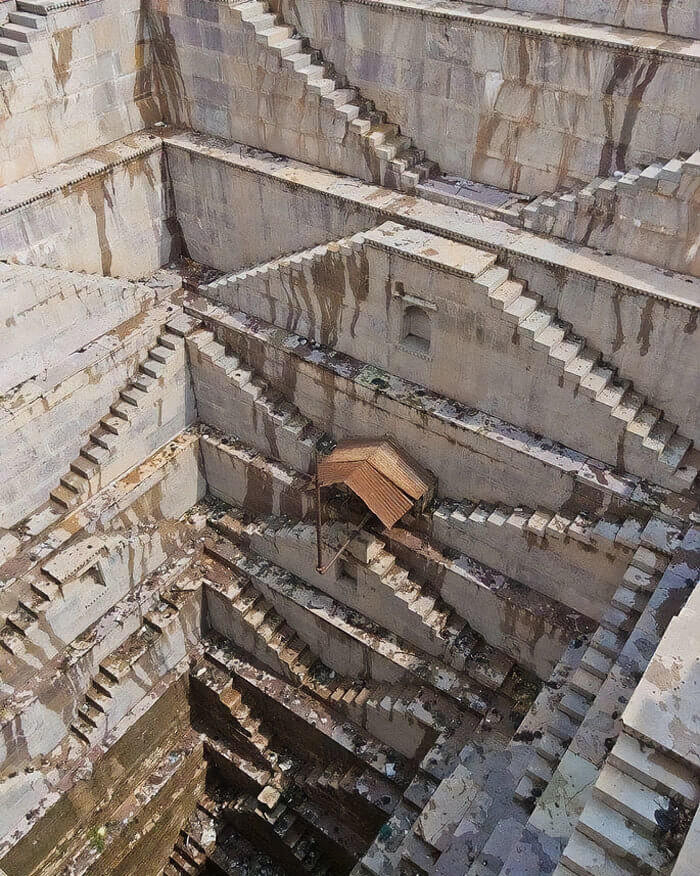
It’s a whopping 150-meters deep and was designed so that there are places to worship on each floor. Beauty aside, we can’t help but think that your legs would get a good workout if you climbed from top to bottom!
These Bright and Beautiful Structures Are a Taiwanese Cemetery
It’s hard to believe that a place so inextricably linked with death could be so beautiful. However, this stunning cemetery in Taiwan indeed manages to achieve that. Just look at the bright colors that decorate these tributes – blues, reds, and golds. It seems a fitting way to celebrate the joy of someone’s life. It must be comforting for the families of the deceased to know their loved ones are at rest in a place of such beauty.

Even the roof carvings are intricate. One thing is clear: a lot of time, effort, and craftsmanship was put into creating a beautiful place to honor the dead, and we love that!
A Baptism Basin From the 400s CE
Pictured here are some immaculately preserved ancient Roman ruins. More specifically, this is a photo of the baptism basin in the Basilica of St. Vitale, Sbeitla in Tunisia. We love the gorgeous mosaic and the colors and patterns that decorate this relic. Its survival is a testament to the superior craftsmanship that went into this work of art. That said, we also love some of the silly things people who visited the site have said about it.
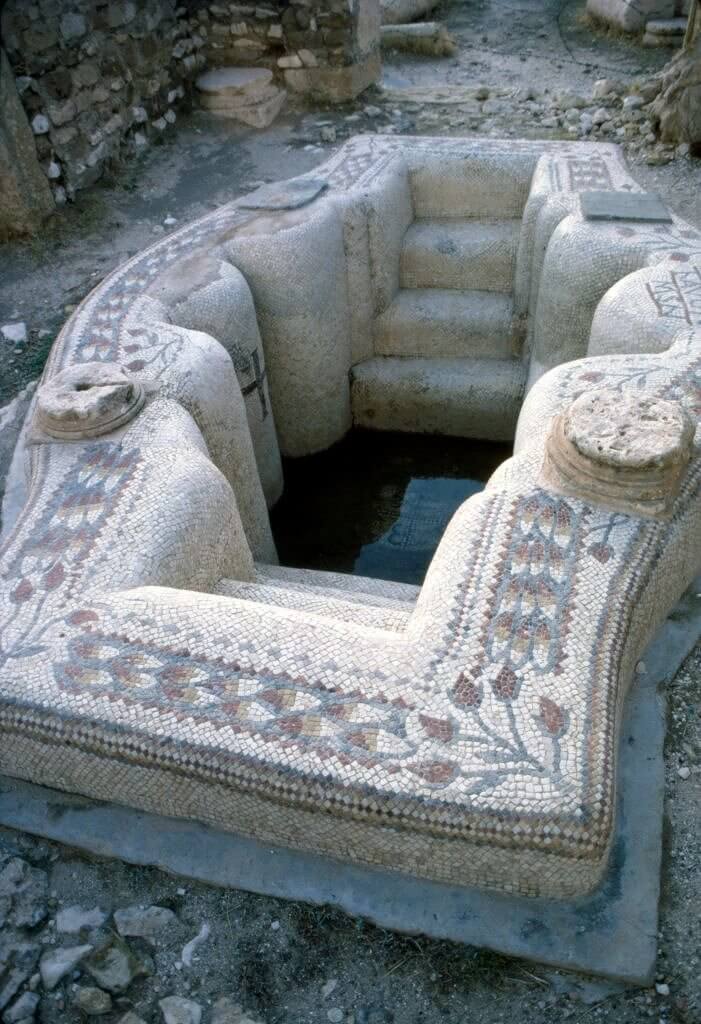
One person likened the back of the baptism pool to that of an old, comfy-looking sofa chair – and now we can’t unsee it! Another says the mosaic reminds them of snake’s skin. Thoughts?
This Magnificent Italian Sculpture Was Created During the Second Century CE
Just look at the impeccable detailing on the Column of Marcus Aurelius, located in Rome, Italy. This stunning relic dates as far back as the second century. The specific subsection of the column snapped here seems to focus on military history and stories. We can see tons of soldiers wearing armor and carrying shields. If you look closely, you can also spot a few horses dragging intricate carriages behind them.

Then if you take a quick peek towards the bottom of the picture, you’ll see what appears to be boats lining the waves. Given all the military references, we can only assume these are warships.
Rio De Janeiro’s Botanical Park Is Over 200 Years Old
Wow- just wow. That’s all we could say when we first saw this fantastic snap of this botanical park. This wonder is located in Rio De Janeiro and was founded in 1808. It is considered one of the best botanical gardens in the world. Just look at how tall those trees are! The way these tower over the person pictured in the photo makes humans look tiny in perspective, and the mountainous backdrop only adds to this spectacle!
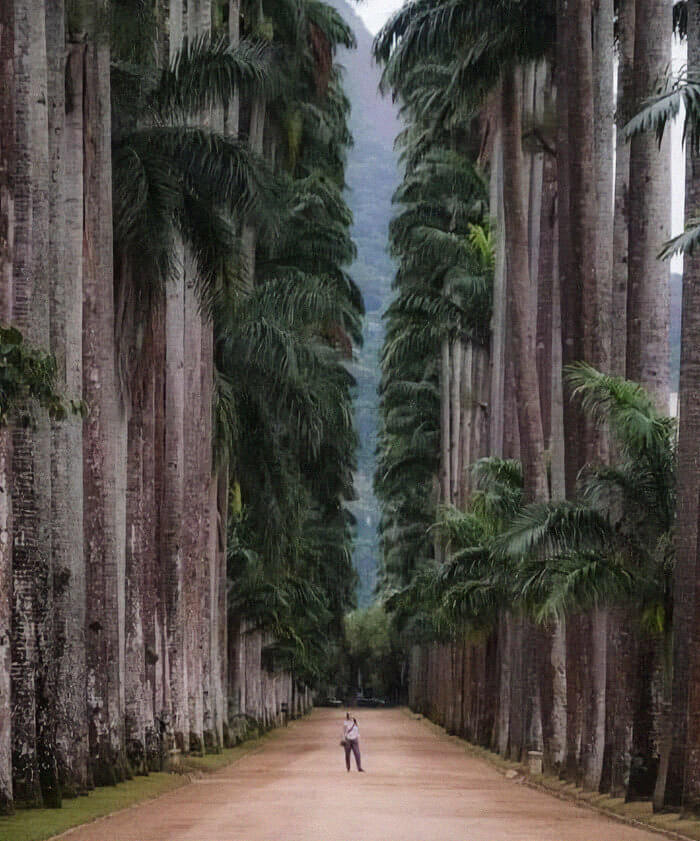
All in all, this place looks truly breathtaking. But, we can’t help but think it would be a tad eerie after the sun goes down. Who knows what might be lurking in the woods?
One Of The Largest Pre-Roman Mosaics Ever Unearthed
Just look at the whopping size of this pre-Roman mosaic. The person hosing down the artwork helps provide some perspective on just how big it is! So, we’re not surprised that this is one of the most extensive pre-Roman mosaics ever to be unearthed. This intricate, complex pattern is said to have been explicitly designed to showcase the power of The Kingdom of Macedonia and can be found in the Palace of Aigai.
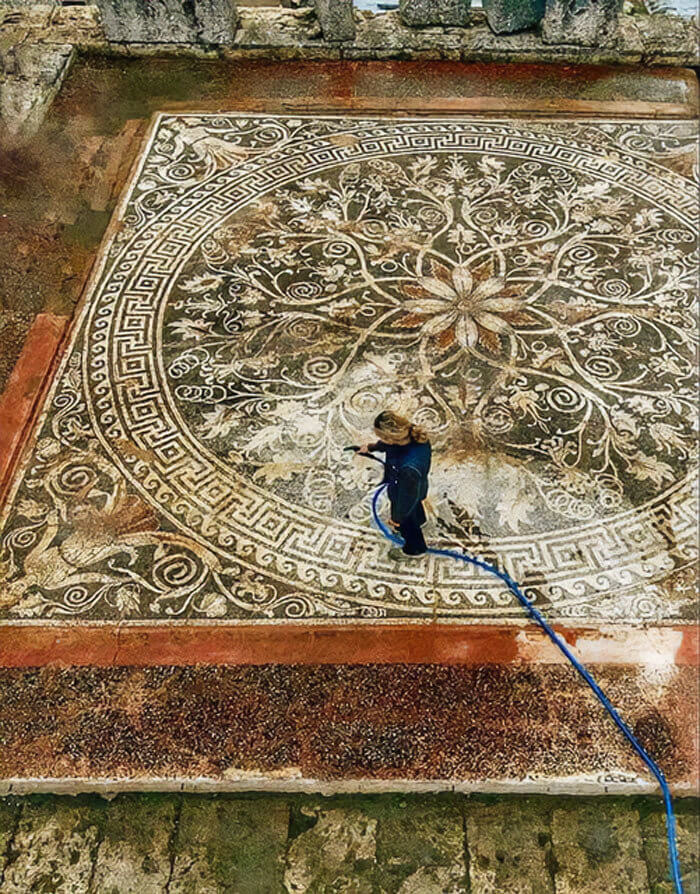
Interestingly, Aigai was the Macedonian empire’s first capital city. We can’t believe its condition considering it was created sometime between 350-340 BCE. That’s well over 2,000 years ago!
Brazil’s Royal Library Was Named the Most Beautiful in the World
This has to be the library to end all libraries, right? Pictured here is a snapshot of the Portuguese Royal Library in Rio De Janeiro, Brazil. This is nothing short of a book-lovers paradise. It makes us wonder whether anyone has ever counted all the books lining these exquisite shelves. Also, how long would it take to read all this content? We can only imagine that it would take decades!

This magnificent library was founded in 1837, and the Brazilian Emperor Pedro II laid the building’s first stone on June 10, 1880. Then, in 1900 the building became public.
Humans Dug These Caves Inside Natural Rocks for Wine Conservation
What we’re looking at here are cave cellars dug into the landscape of Pietragalla, a town in the province of Potenza in the Southern Italian region of Basilicata. Interestingly, these are still used today to conserve wine. Apparently, you can reach these quirky caves via the alleys of the medieval village. Further still, you can continue climbing to the highest point of Pietragalla, where the church (San Nicola di Bari) and the castle, Palazzo Ducale, sit.
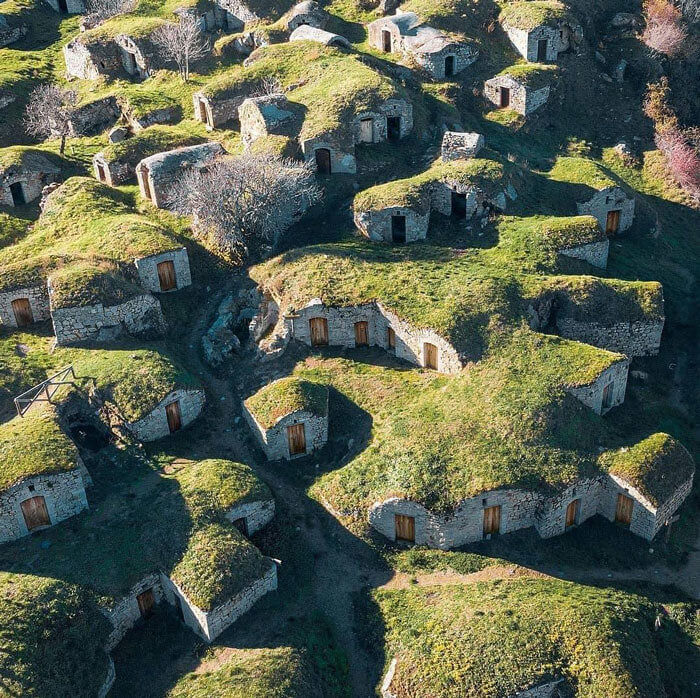
It sounds like this Italian town would be an incredible place to visit! That said, we still can’t work out whether it’s moss or grass lining the cellars – either way, they’re still wonderful!
This Roman Mosaic Was Unexpectedly Uncovered in Croatia
Could you imagine being the construction worker tasked with maintaining the pipes, gas lines, or whatever else, and then you start digging the pavement only to find a nearly immaculately preserved Roman mosaic? We bet that doesn’t happen every day! Interestingly, this underground artwork has only recently been unearthed in the Old Town of Hvar, Croatia. Just look at the beautiful colors used to create this masterpiece. We love the geometric shapes and pretty floral motifs.
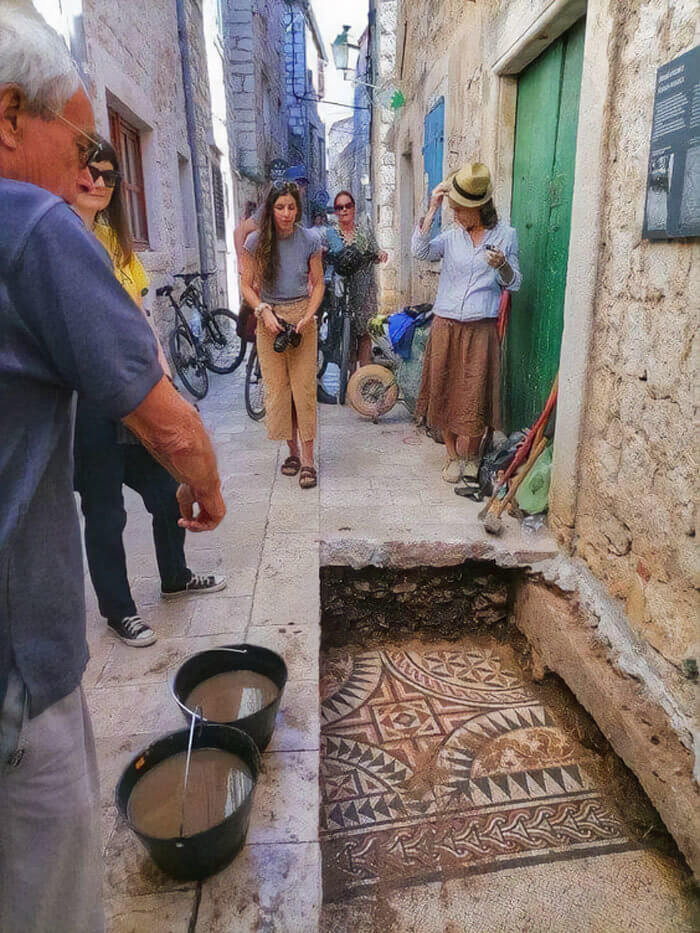
Experts suggest that this mosaic dates back to the 2nd century CE. That makes this work of art a staggering 2,400 years old! It’s hard to believe, considering it’s in practically pristine condition!
The Terracotta Army Built in 209 BCE
Pictured here is the Terracotta Army. As its name so aptly suggests, it’s a massive collection of terracotta warriors. More specifically, these statues depict Qin Shi Huang’s army, the first emperor of China. Amazingly this is actually a form of funerary art. It’s estimated that this terracotta army was buried around 210–209 BCE with the emperor, with the idea being that these warriors would protect the emperor during his afterlife.

These beauties were discovered in 1974 by local farmers in Lintong County, outside Xi’an, Shaanxi, China. Could you imagine just going about your everyday business to stumble across these ancient figures?!