These Golden Age Red Carpet looks broke fashion barriers and set new trends for everyone.
Ginger Rogers’ Sheer Lace “Lingerie” Look Caused Quite the Stir in 1941
Ginger Rogers won Best Actress for Kitty Foyle, but it was her dress that truly sparked conversation. She wore a dark silk gown with a sheer lace top that some critics at the time felt was a bit too close to “negligee” territory. While it was undoubtedly elegant, the transparent nature of the lace bodice was quite daring for 1941. Allegedly, some conservative attendees whispered about the choice.
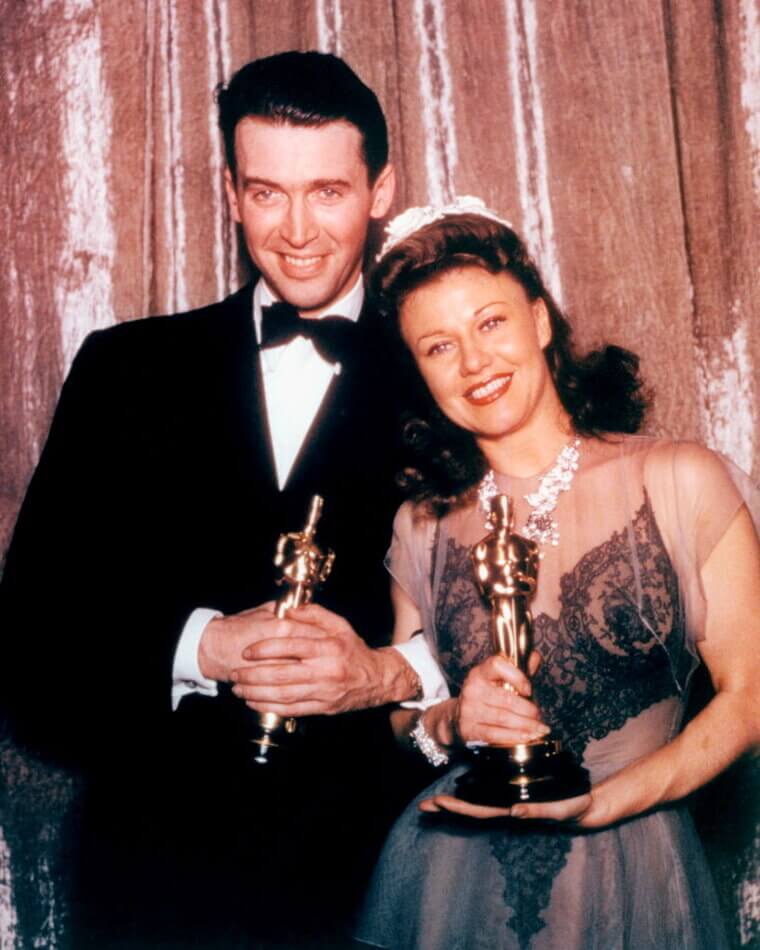
But Ginger wore it with such confidence that it became a landmark moment for stars pushing the boundaries of what was considered “appropriate” evening wear for a leading lady.
Ingrid Bergman’s Minimalist “Suit” Style Paved the Away for Starlets to Ditch Costume Gowns for Personal Style (1945)
Ingrid Bergman was never one for excessive fluff, and her 1945 Oscar look proved it. She wore a very simple, dark tailored dress that almost resembled a formal suit, reflecting the utilitarian “Make Do and Mend” spirit of the era. While some expected more “sparkle” from a Best Actress winner, Ingrid’s choice was hailed by others as a refreshing display of authenticity. This look reportedly helped shift the red carpet away from strictly “costume” gowns.
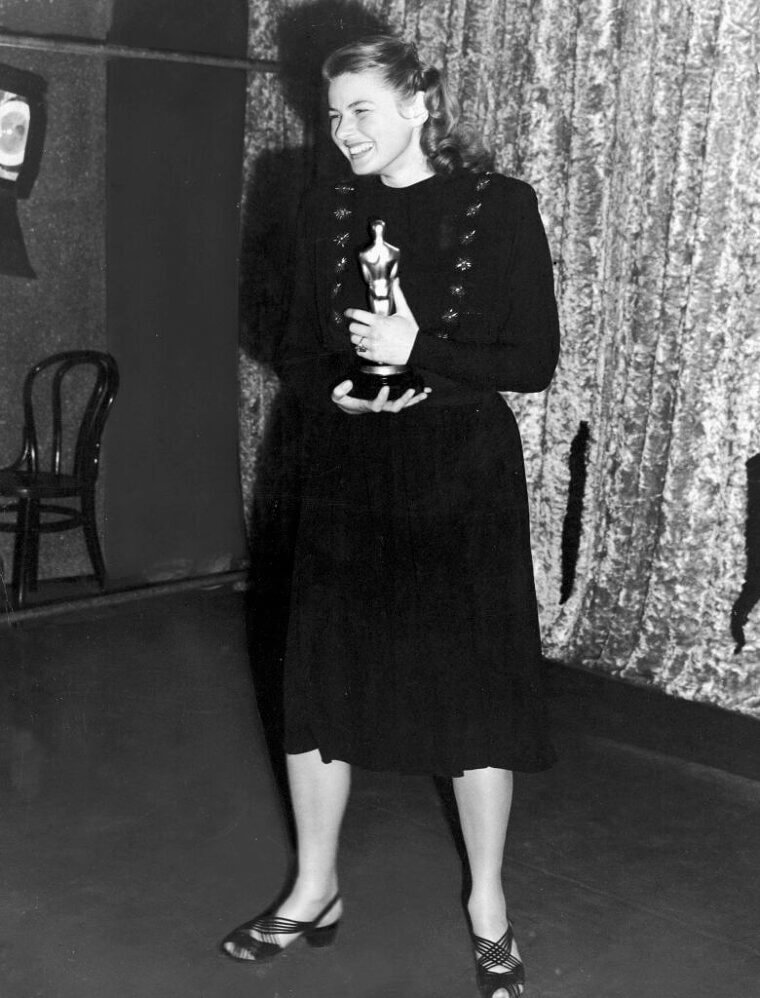
Stars started inching toward a more personalized sense of style, showing that a woman’s talent should always be the main event.
Barbra Streisand’s Scandalously Sheer Pantsuit (1969)
This is the “What were they thinking?” moment that defined a decade. When Barbra Streisand won for Funny Girl, she stepped onto the stage in a sequined, wide-legged pantsuit by Arnold Scaasi. The problem? Under the bright stage lights, the fabric became almost completely transparent. Barbra reportedly had no idea it was see-through until she saw the photos the next day. It scandalized the more conservative viewers.
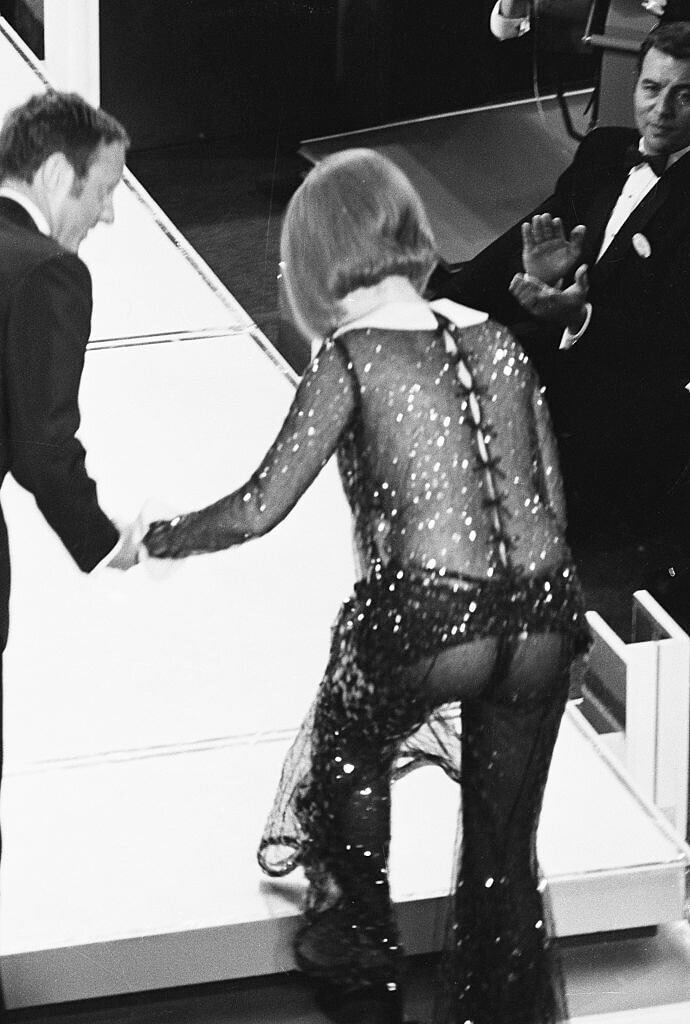
But it also turned her into a fashion rebel overnight. It was a bold, accidental statement on transparency that people are still talking about fifty years later.
Cher’s Groundbreaking Dress Was the First of Its Kind (1974)
Long before the “naked dress” trend of the 2010s, there was Cher. At the 1974 Met Gala, she arrived in a Bob Mackie creation that was essentially sheer mesh with strategically placed white feathers and sequins. It was a jaw-dropping departure from traditional formal wear. While some critics allegedly called it “undignified,” it became the blueprint for Cher’s entire fashion legacy. It showed that she wasn’t just a singer.
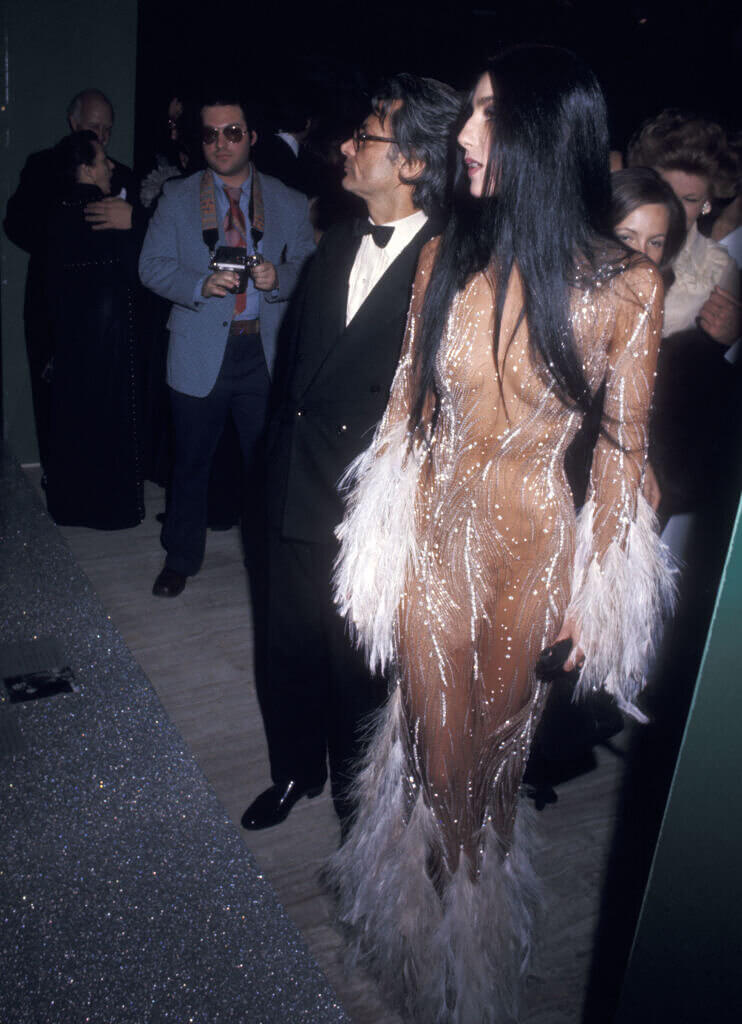
She was a walking piece of art. It remains one of the most daring and influential red carpet moments of all time.
Jane Birkin’s Crochet See-Through Dress – Which She Wore Backwards for a Plunging Neckline
Jane Birkin was the ultimate “cool girl” of the 60s, and her appearance at a Paris gala in 1969 proved it. She wore a white crochet dress that was entirely sheer, and in a move that baffled and delighted fashionistas, she wore it backward to create a plunging neckline. She reportedly cinched the front with a brooch and carried her signature wicker basket. It was the height of “boho-chic.”
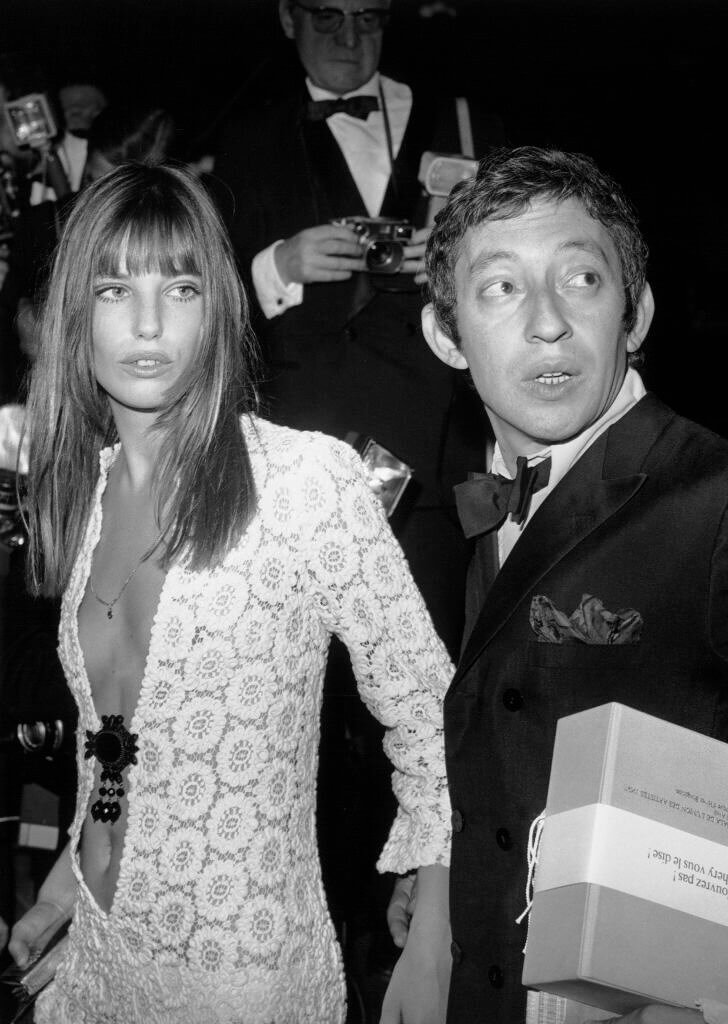
Scandalized traditionalists who were used to stiff corsetry. It remains a symbol of the free-spirited, effortless style that defined the era.
Raquel Welch’s Blue Sequin Catsuit Scandalously Brought Disco Style to a Room Filled With Gowns (1979)
Raquel Welch brought the disco era to the red carpet in 1979 with a royal blue sequined catsuit by Loris Azzaro. It featured a plunging neckline and a skin-tight silhouette that left nothing to the imagination. In a room full of flowing gowns, Raquel looked like she had just stepped off the dance floor at Studio 54. It was a “for better or worse” moment because it was so aggressive in its modernity.
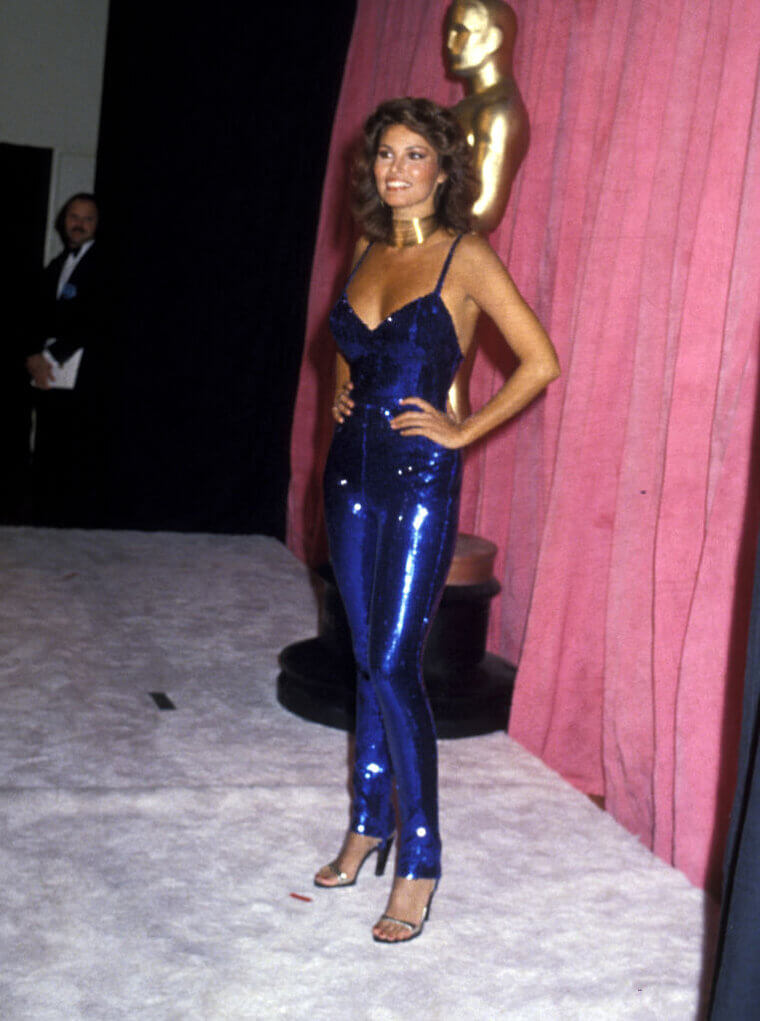
But it perfectly captured the high-energy, high-glamour transition into the 1980s. She looked absolutely electric.
Diane Keaton Shattered Every Red Carpet Rule by Wearing a Suit and Tie to the Oscars (1976)
Diane Keaton broke every red carpet rule when she showed up to the Oscars in a white suit, a vest, and a tie. This “androgynous” look was a direct reflection of her character in Annie Hall and her personal style. At a time when women were expected to be in sequins and tulle, Diane’s “menswear” choice was a shock. Some critics allegedly thought she was being disrespectful to the event, but history has judged her kindly.
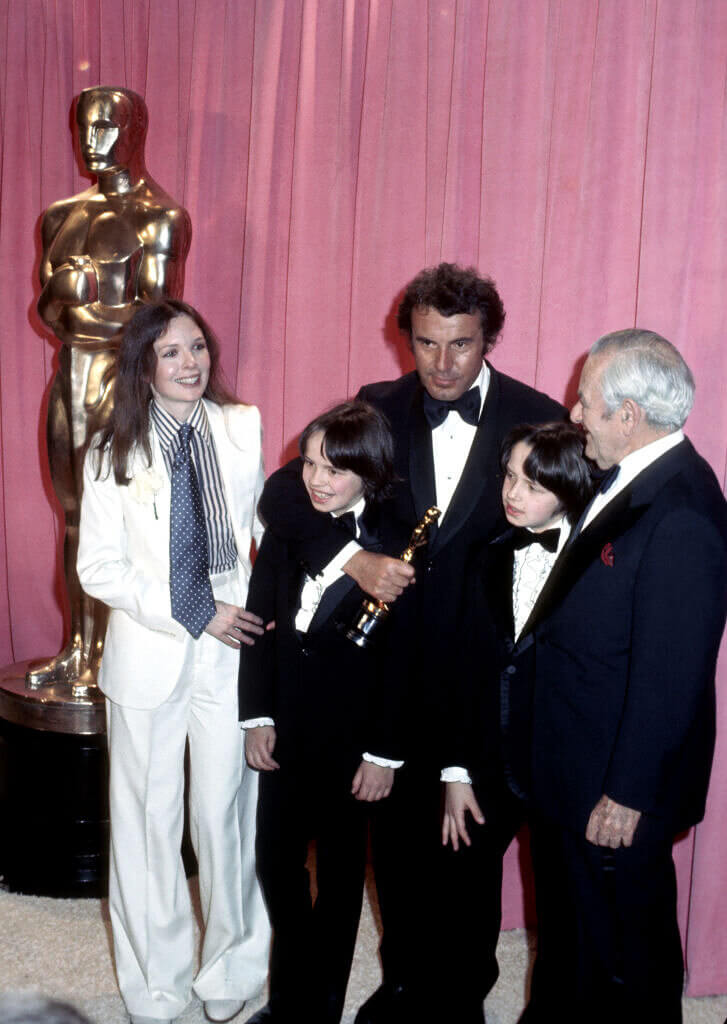
She proved that style isn’t about following rules; it’s about being yourself, even on the biggest stage.
Dolly Parton’s “Barbiecore” Cowboy Suit Drew Lots of Criticism but Was an Early Lesson on Branding and Marketing (1977)
Long before “Barbiecore” was a term, Dolly Parton arrived at the Grammys in a bubblegum pink, rhinestone-encrusted jumpsuit with bell-bottoms. It was loud, proud, and completely Dolly. While the fashion elite of the time reportedly looked down on her “campy” style, this outfit is now viewed as a masterclass in branding. She took the “What were they thinking?” question and answered it with a smile.
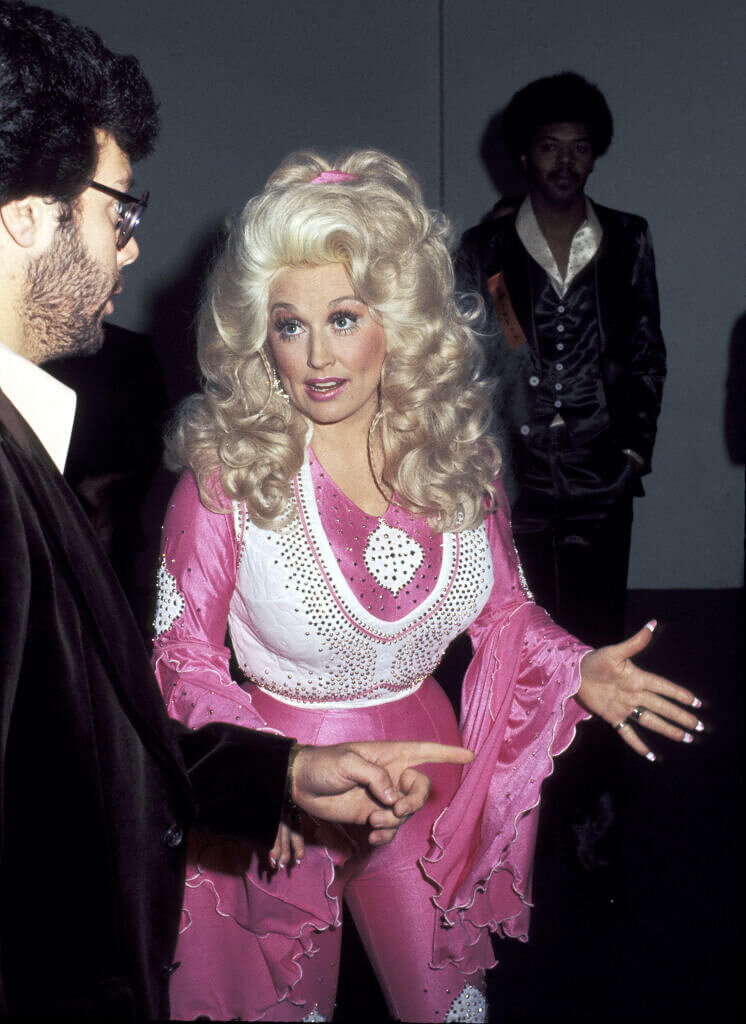
She proved thatthat being “too much” is sometimes exactly the right amount. It’s a joyful, sparkly reminder that the red carpet should be fun.
Lauren Hutton’s Pastel Rainbow-Fur Combination Was Ahead of Its Time (1975)
Model Lauren Hutton brought high-fashion “cool” to the 1975 Oscars in a Halston gown that featured a pleated, pastel rainbow skirt. But the real talk of the night was the massive fur coat she draped over her shoulders. It was a look that screamed “New York City chic” in the middle of Hollywood. While some found the fur-on-top-of-rainbow-pleats to be a bit chaotic, it is now celebrated for its “unbothered” elegance.
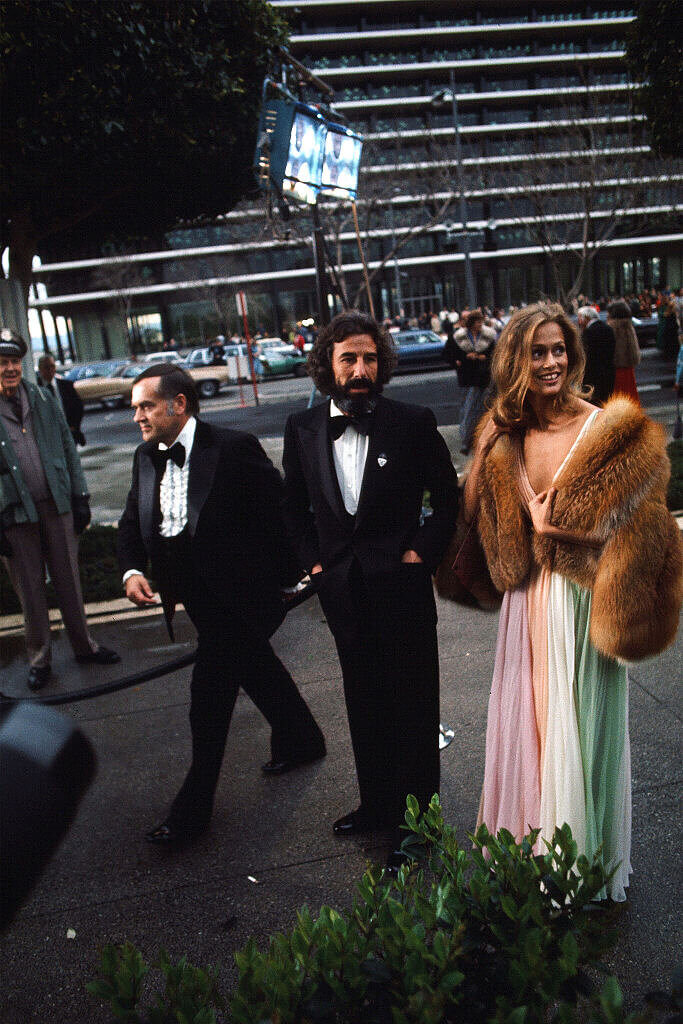
Lauren looked like she was having the best time, proving that a red carpet is just another place to show off your personality.
Bette Davis’s “Dark Angel” Look Was Shockingly Gloomy for the Time (1955)
Bette Davis was never one to play it safe. At the 1955 Oscars, she wore a dark, heavy gown with a structured collar that framed her face like a dramatic portrait. It was a “villainous” take on glamour that stood out in a sea of sweet, pastel dresses. Some reportedly found it “gloomy,” but Bette was sending a message: she was a serious actress, not a doll. This look is still talked about for its sheer intensity.
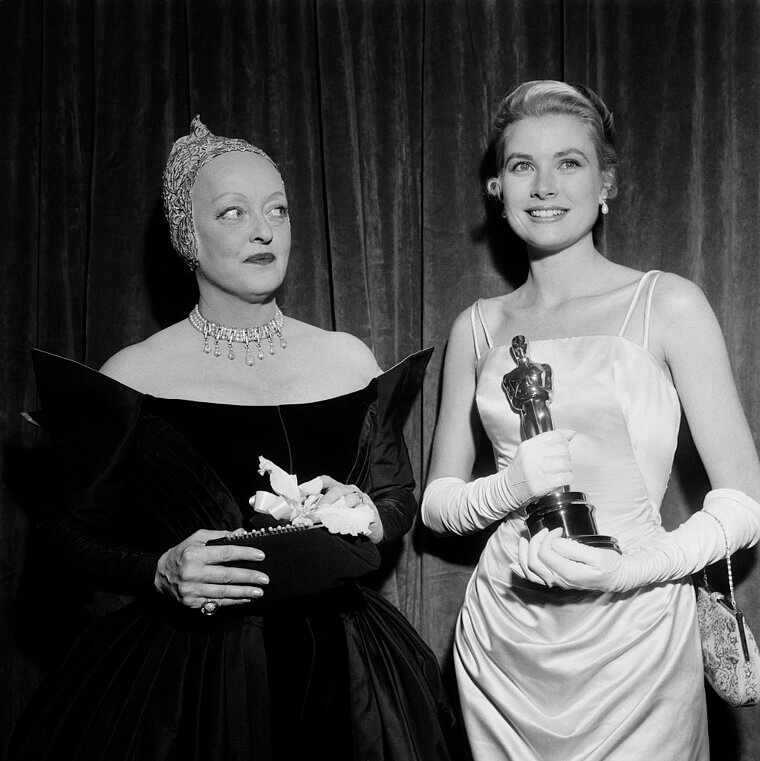
And for the way it used fashion to reinforce her “legend” status. She was truly a one-of-a-kind presence.
Diana Ross Scandalously Wore Pants to the Oscars (1973)
Diana Ross lived up to her legendary status at the 1973 Oscars in a shimmering gold satin pantsuit by Bob Mackie. It featured a matching waist-length jacket and high-waisted trousers, all in a brilliant metallic hue. She looked like a trophy herself. This was a “for better or worse” moment because it was so flashy and “unconventional” for the Academy, but Diana wore it with such poise that she looked like royalty.
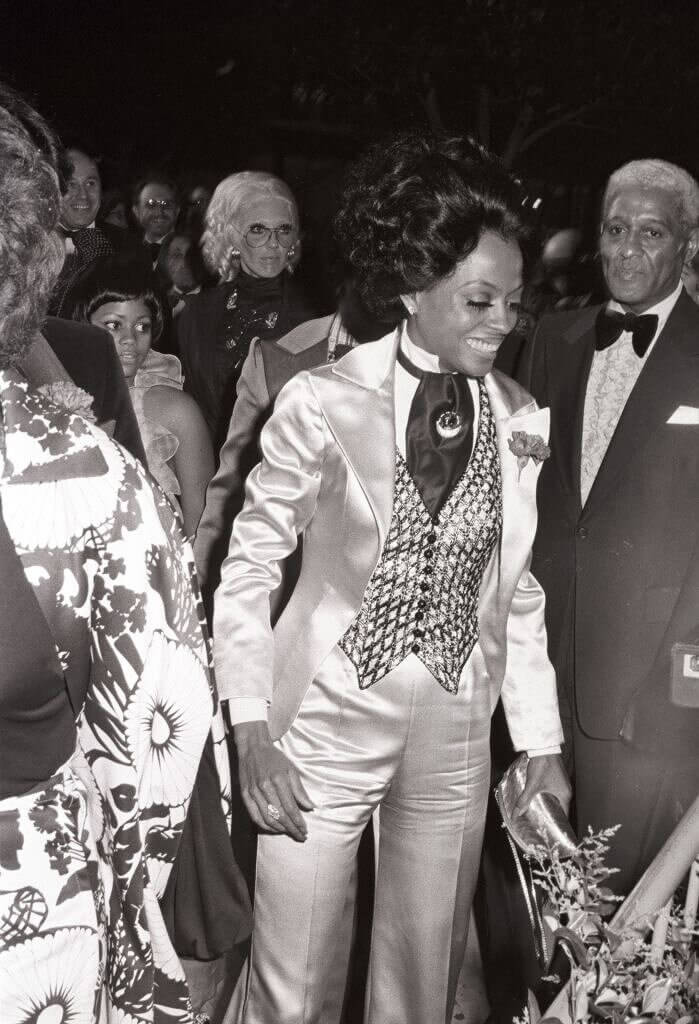
It was the ultimate “diva” moment, showing that a woman in pants could be just as glamorous as a woman in a gown.
Cher’s Revealing “Egyptian Goddess” Look Had Everyone Talking (1973)
Cher and Bob Mackie were at it again in 1973. She wore a two-piece outfit that featured a tiny bra top and a low-slung skirt, all heavily beaded with Egyptian-inspired patterns. It was the ultimate “look at me” outfit. Critics at the time were reportedly divided—some loved the artistry, while others thought it was too revealing for a formal event. Regardless of the opinions, it became a permanent part of fashion history.
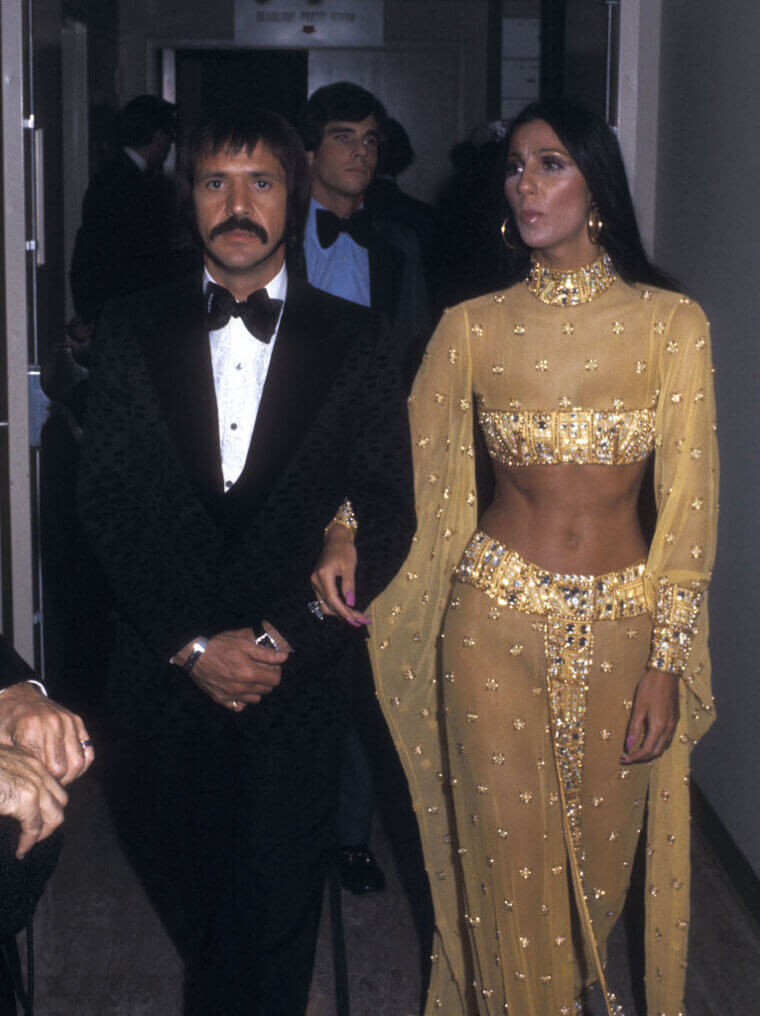
Cher proved that the red carpet wasn’t just for dresses; it was for making a statement that nobody would ever forget.
Jayne Mansfield’s Infamous Dress Worn to Steal Attention From Hostess Sophia Loren (1957)
While technically a dinner party rather than a formal award show, this moment remains one of the most famous fashion scandals of all time. Jayne Mansfield arrived in a pink satin gown with a neckline so daringly low that it reportedly led to a “wardrobe malfunction” during the meal. The event was a welcome dinner for Sophia Loren, and the resulting photograph—showing Sophia glaring directly at Jayne’s bodice—became an instant classic.
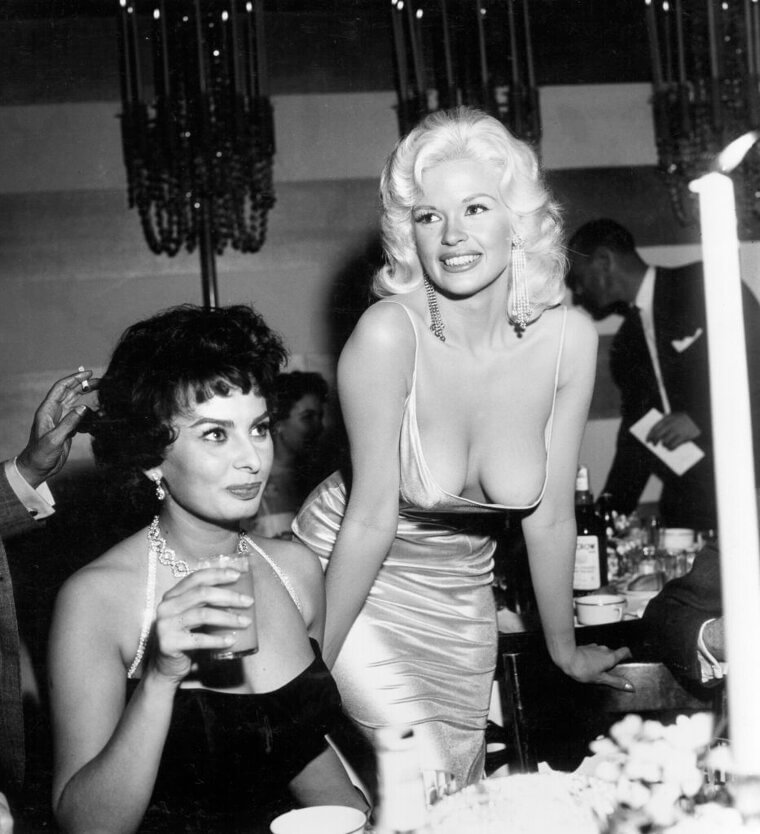
Sophia later admitted she was terrified that Jayne’s dress wouldn’t stay in place. It remains the ultimate example of a star using fashion to steal the spotlight from their host.
Carroll Baker’s Sheer Scandal Had America Gasping (1964)
Long before the term “naked dress” was a household phrase, actress Carroll Baker caused a massive stir at the London premiere of The Carpetbaggers. She wore a Pierre Balmain gown that was essentially a nude-colored silk sheath topped with entirely transparent lace. It was so revealing for 1964 that it reportedly caused a near-riot outside the theater. Police allegedly had to step in to manage the crowds who were desperate to get a glimpse of the star.
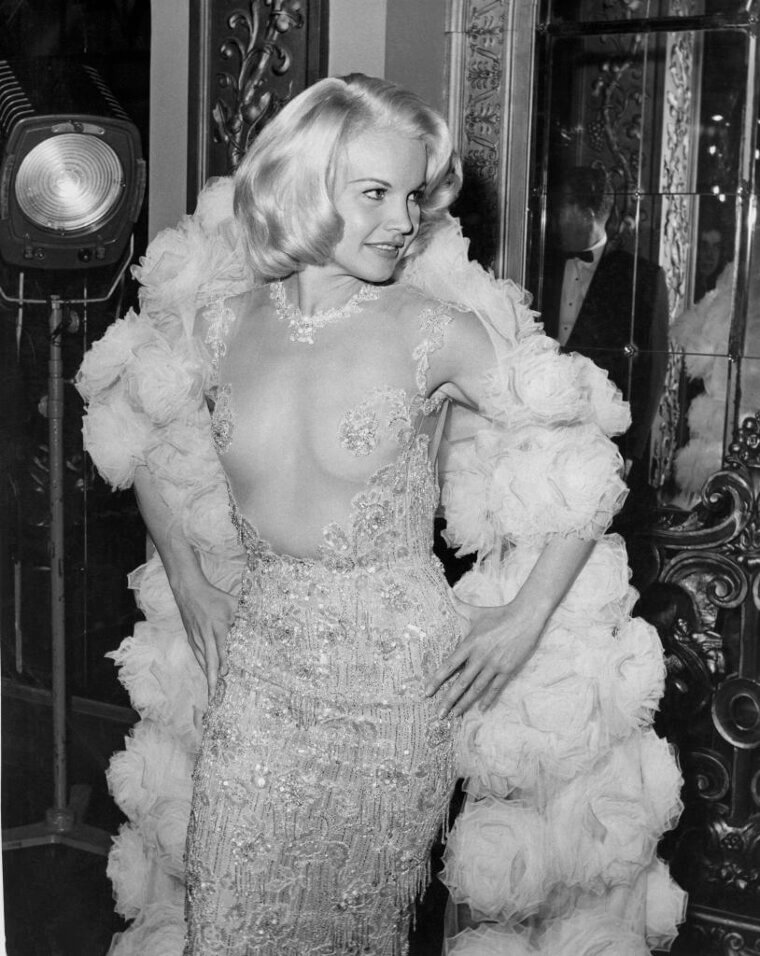
It was a calculated move to promote her “bombshell” image, but it nearly backfired when the more conservative press labeled the look “indecent.”
Edy Williams’ Leopard Bikini and Fur Coat Had Everyone Talking (1974)
If you want to talk about “What were they thinking?”, you have to mention Edy Williams. She made a career out of crashing the Academy Awards in outfits that were barely there. In 1974, she arrived on the red carpet wearing a tiny leopard-print bikini and a massive fur coat. She reportedly dropped the coat for photographers, leading to a spectacle that overshadowed many of the actual nominees.
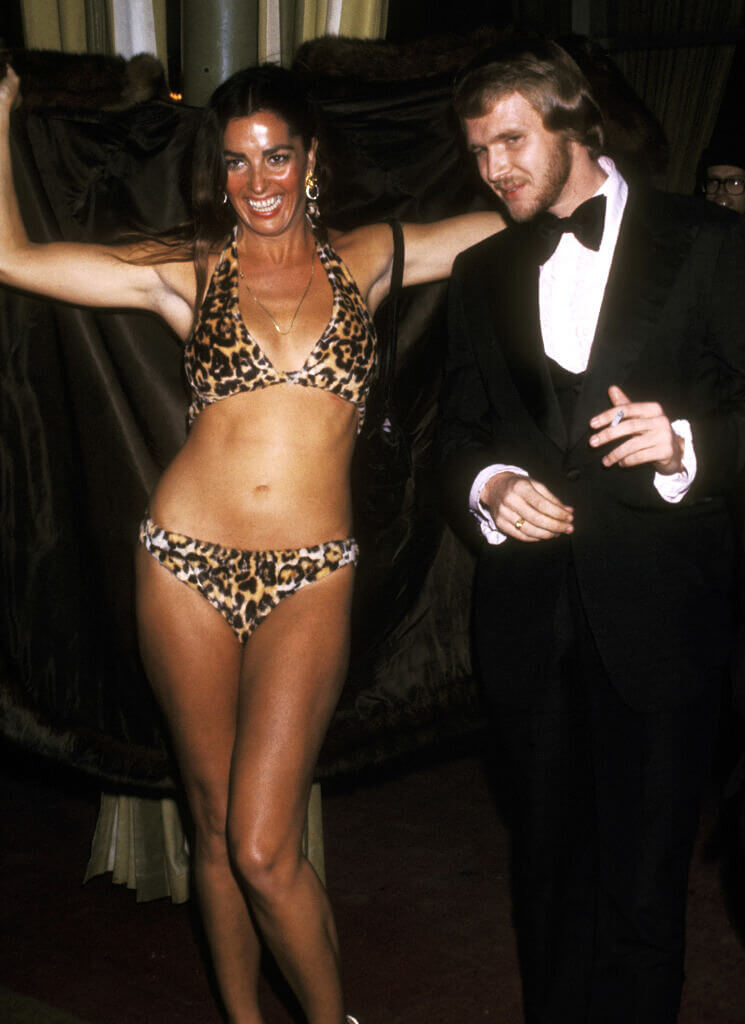
While she was never a major award contender, her ability to hijack the red carpet with “outrageous” fashion made her a staple of gossip magazines for years. It was the ultimate 70s publicity stunt.